Accelerating Production of a High Performance Automotive Cooling Manifold Through Integrated CNC Machining
The Challenge
A UK automotive engineering company required a low volume production run of aluminium cooling manifolds for a high performance vehicle development programme.
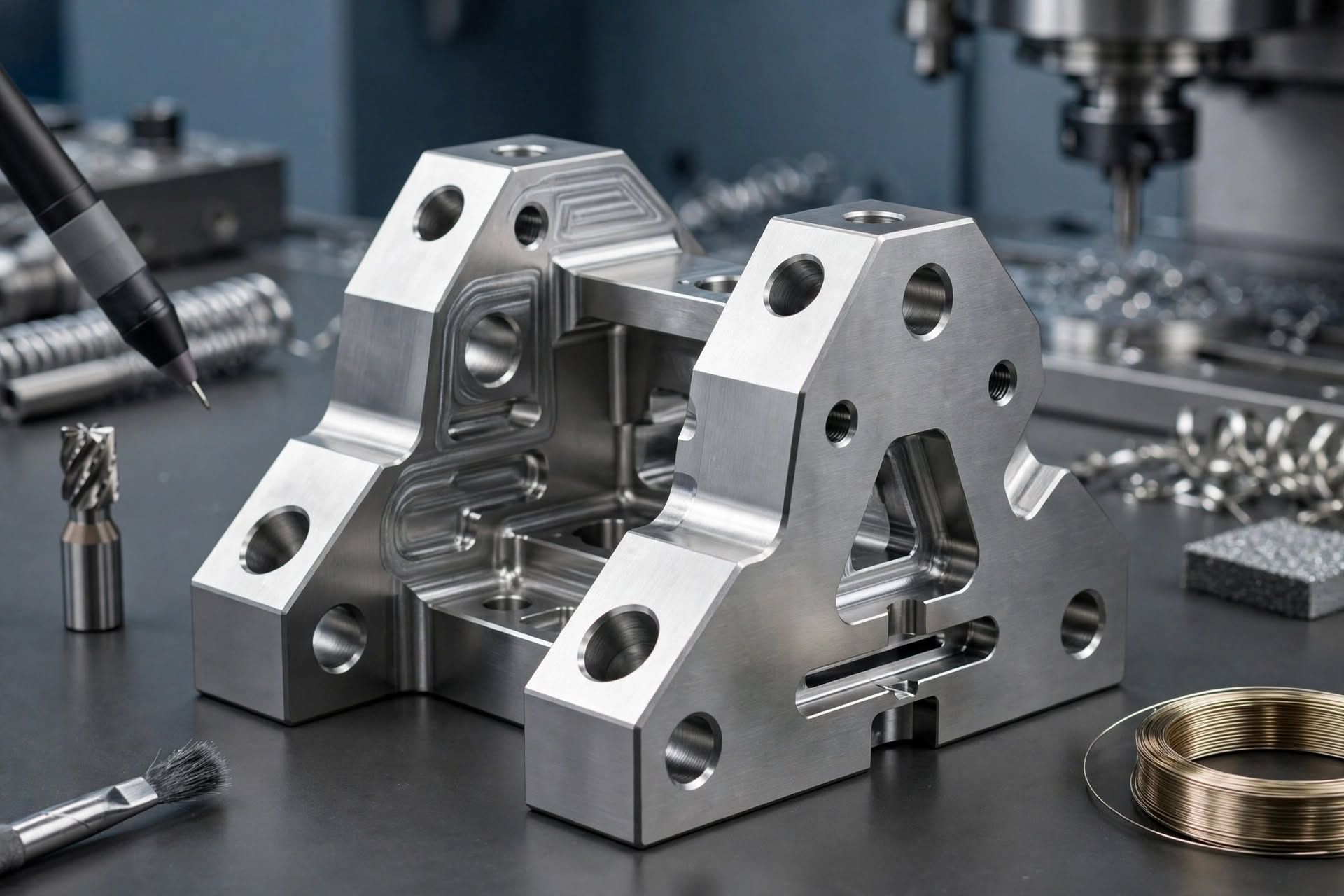
The manifold was designed to distribute coolant between several thermal management components while fitting inside a tightly restricted installation area. Its compact geometry included angled ports, intersecting internal passages, deep machined cavities, and multiple threaded connection points.
The client had previously produced early prototypes using separate machining suppliers. This resulted in repeated setups, inconsistent lead times, and additional handling between machining stages.
The component also required several small precision fittings and a hardened steel flow control plate. The plate contained narrow profiles that were difficult to produce using conventional milling without placing excessive load on the cutting tools.
The client needed a manufacturing partner capable of producing twelve complete assemblies within five weeks while maintaining accurate port locations and a consistent finish across the visible surfaces.
The project required an efficient CNC machining Scotland solution that could manage the complete production route from raw material through to finished sub assembly.
The Engineered Solution
The engineering team reviewed the component model and developed a machining strategy that reduced unnecessary handling while maintaining access to the manifold’s complex geometry.
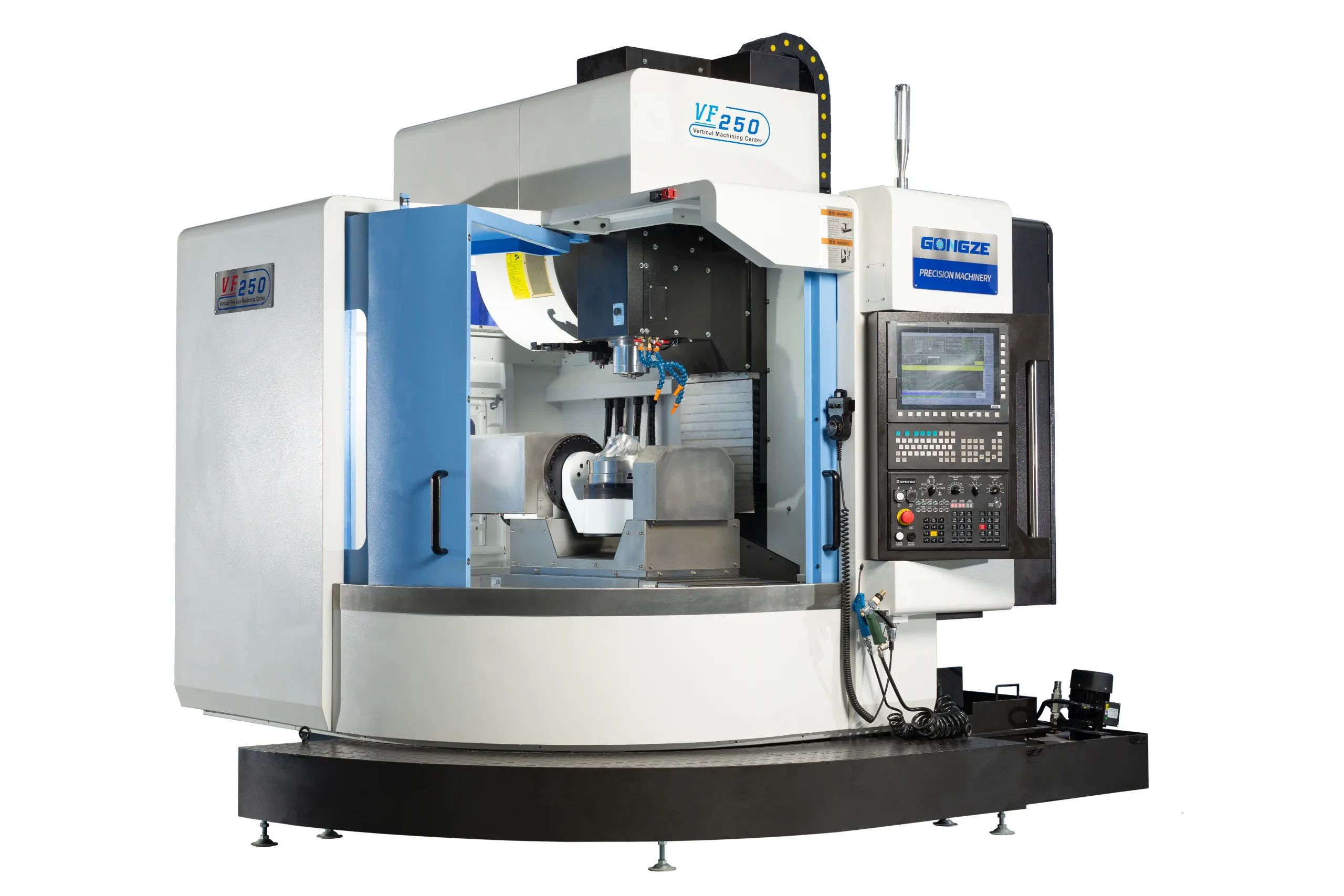
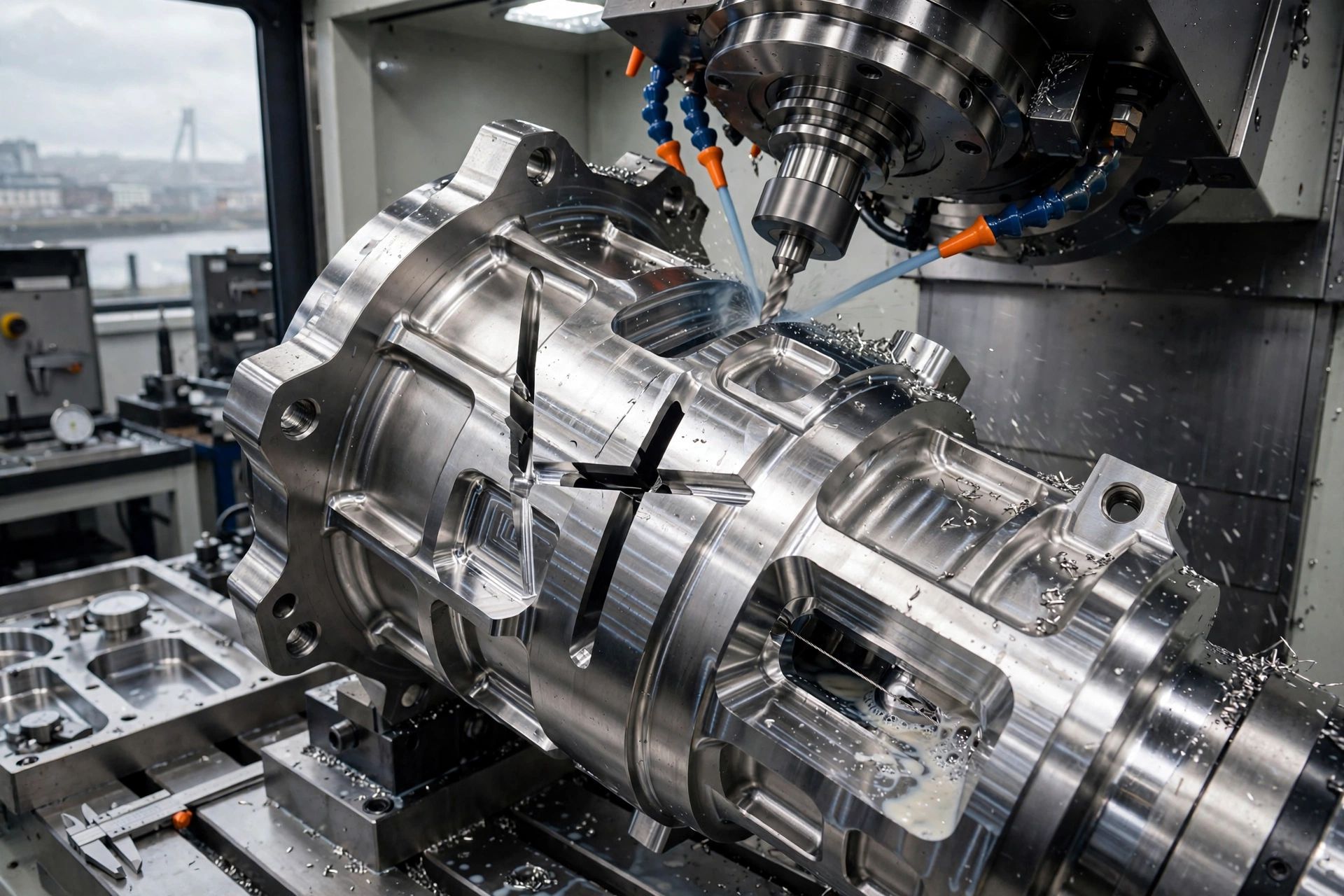
The main manifold body was produced from aerospace grade aluminium using advanced 5 axis CNC milling. The multi axis approach allowed the angled connection faces and complex port geometry to be machined with fewer fixture changes.
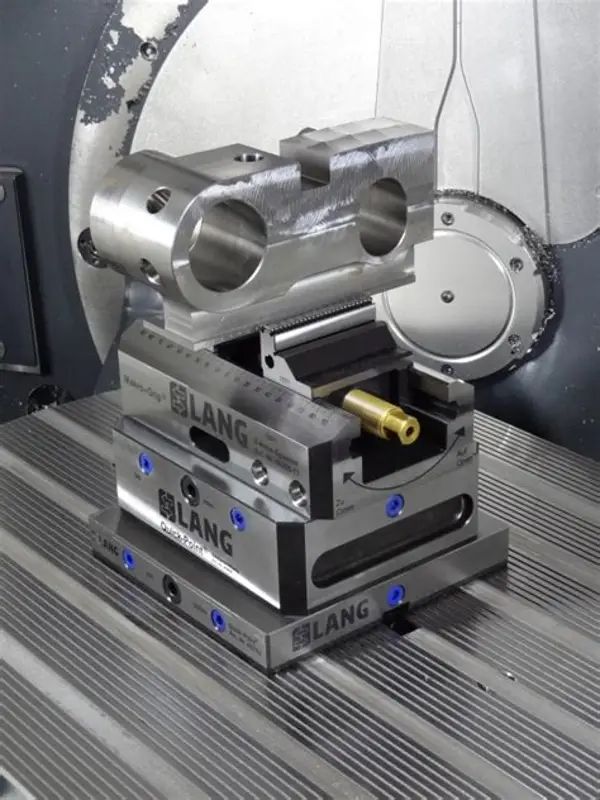
The original production plan required four separate milling setups. By redesigning the workholding arrangement and using indexed 5 axis tool paths, the team completed the majority of the machining from two primary positions.
High efficiency roughing cycles removed material from the internal cavities while maintaining controlled cutting loads. The remaining wall sections were then finished using lighter tool engagement to reduce vibration and protect the dimensional stability of the part.
Special attention was given to the intersecting coolant passages. Tool paths were programmed to maintain smooth internal transitions and reduce the possibility of sharp changes that could affect coolant movement.
The threaded connection features were finished during the final machining stage to maintain accurate relationships between the ports and mounting faces.
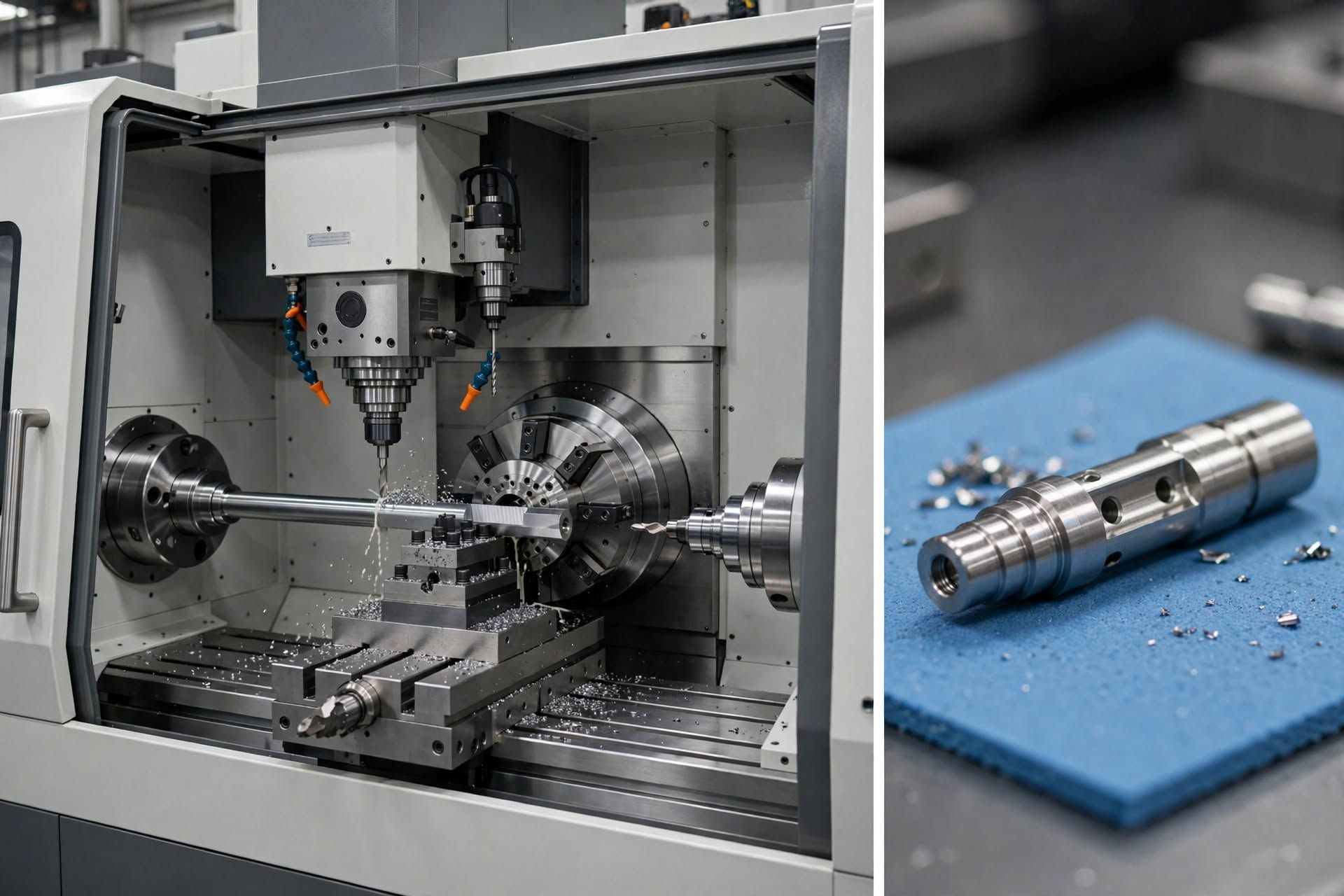
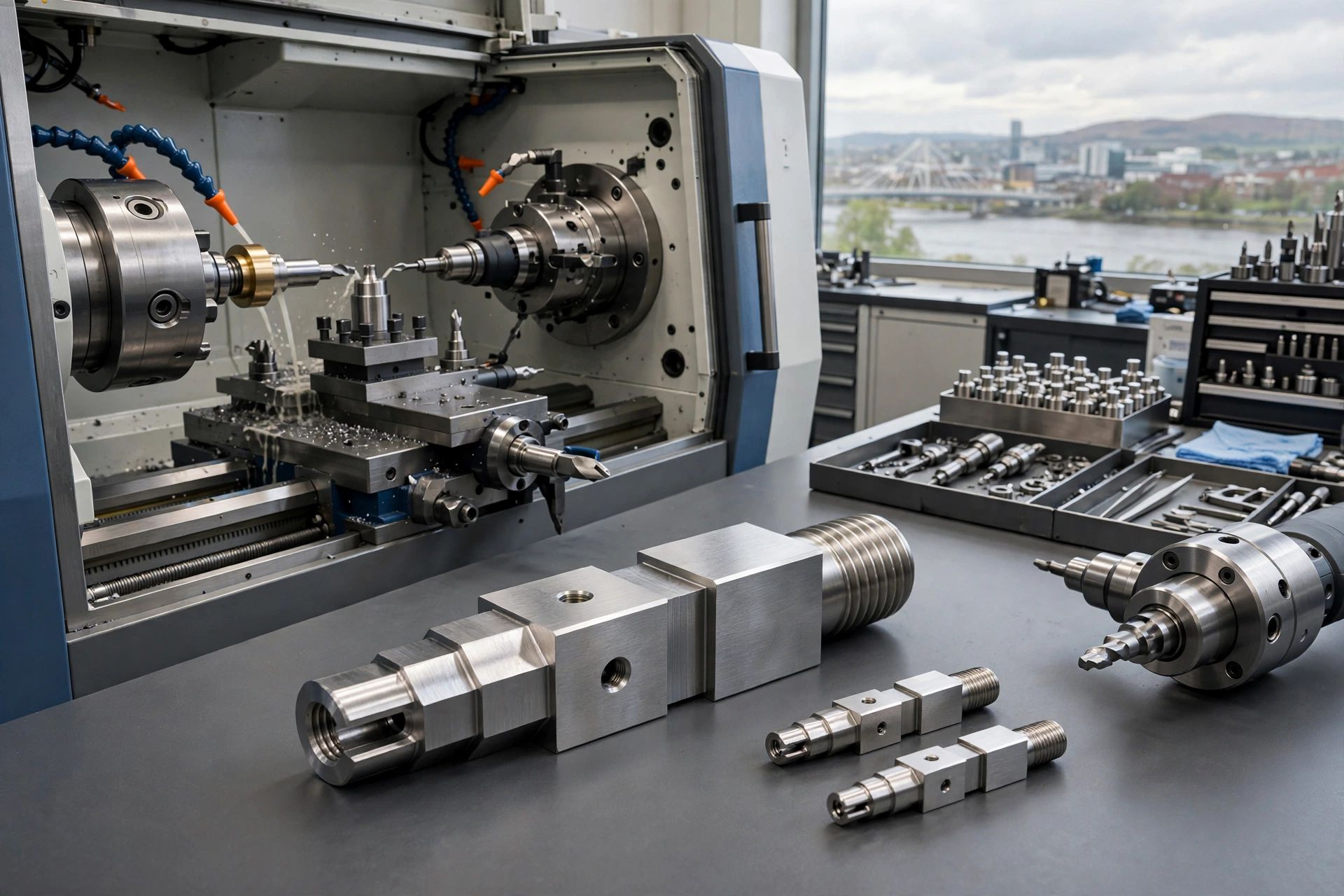
The smaller fittings were produced as precision turned parts using CNC sliding head turning. This process allowed the required external diameters, threaded sections, and locating shoulders to be completed efficiently from bar stock.
The hardened steel flow control plate contained narrow slots and detailed internal profiles. EDM wire erosion Scotland capability was selected to produce these features without creating high cutting forces or damaging the hardened material.
After machining, the aluminium bodies received a controlled surface finishing process. The visible external faces achieved a consistent surface roughness of Ra 1.2 micrometres.
All fittings and machined plates were then brought together through sub assembly engineering. The completed manifolds were assembled with the required hardware and checked for correct fit and smooth component engagement.
This integrated approach allowed the client to receive complete assemblies rather than coordinating separate deliveries from multiple suppliers.
The Outcome and Operational Impact
The revised manufacturing route reduced the number of primary milling setups from four to two. This created a 50 percent reduction in setup time and reduced the risk of positional variation between operations.
The use of 5 axis CNC milling also improved machining access and shortened the main body production cycle by 18 percent.
CNC sliding head turning reduced the average cycle time for the smaller fittings by 24 percent while supporting consistent production across the complete batch.
The finished manifold bodies achieved the specified Ra 1.2 micrometre surface finish, and all twelve complete assemblies were delivered within four weeks. This was one week ahead of the requested schedule.
By combining milling, turning, EDM work, surface finishing, and assembly through one supplier, the client reduced component handling and simplified project coordination.
The project demonstrated how precision engineering Dundee expertise can support demanding automotive development programmes through efficient and flexible subcontract manufacturing UK services.
Have a complex engineering component or production bottleneck? Send your technical specifications and RFQ straight to the engineering team at Strategic Innovations Dundee Ltd for a comprehensive manufacturing evaluation.