Cutting Cycle Times for High-Volume Automotive Precision Turned Parts Using CNC Sliding Head Turning
The Challenge
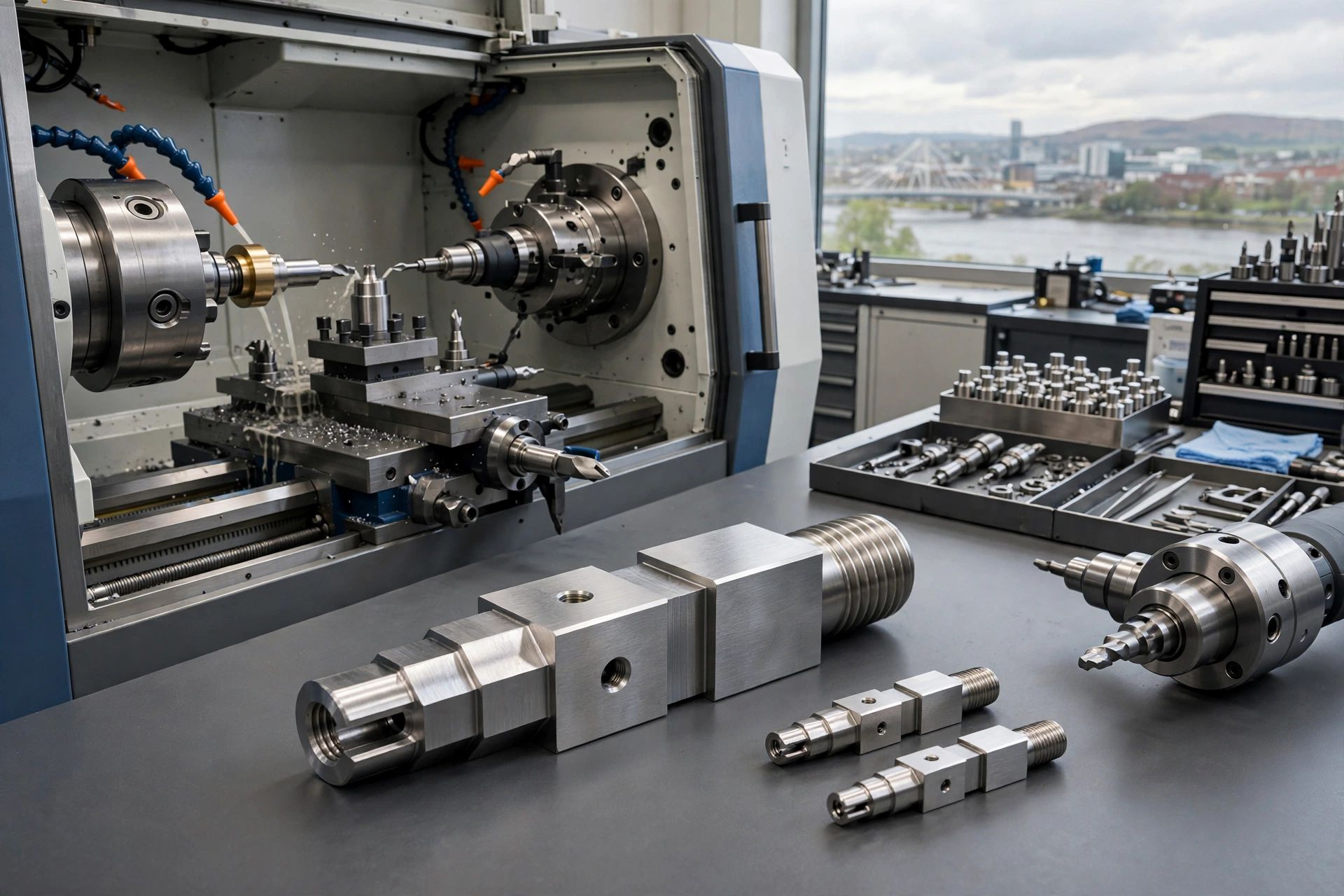
An automotive engineering client required a repeat production batch of small-diameter 316 stainless steel precision turned parts used within a non-safety-critical vehicle assembly system. The component measured approximately 12 mm in diameter and incorporated multiple stepped diameters, fine external threads, cross-drilled holes and a narrow internal bore.
The existing manufacturing route relied on conventional CNC turning followed by several secondary operations. Each additional operation increased handling, setup requirements and overall production cost. The client also needed consistent surface quality across a high-volume batch while maintaining tight dimensional relationships between the turned and cross-machined features.
The priority was therefore to develop a faster manufacturing process without compromising the component’s functional geometry. The project provided an ideal application for CNC sliding head turning within a modern subcontract manufacturing environment.
The Engineered Solution
Strategic Innovations began by reviewing the component drawing and identifying which secondary operations could be transferred directly into the turning cycle.
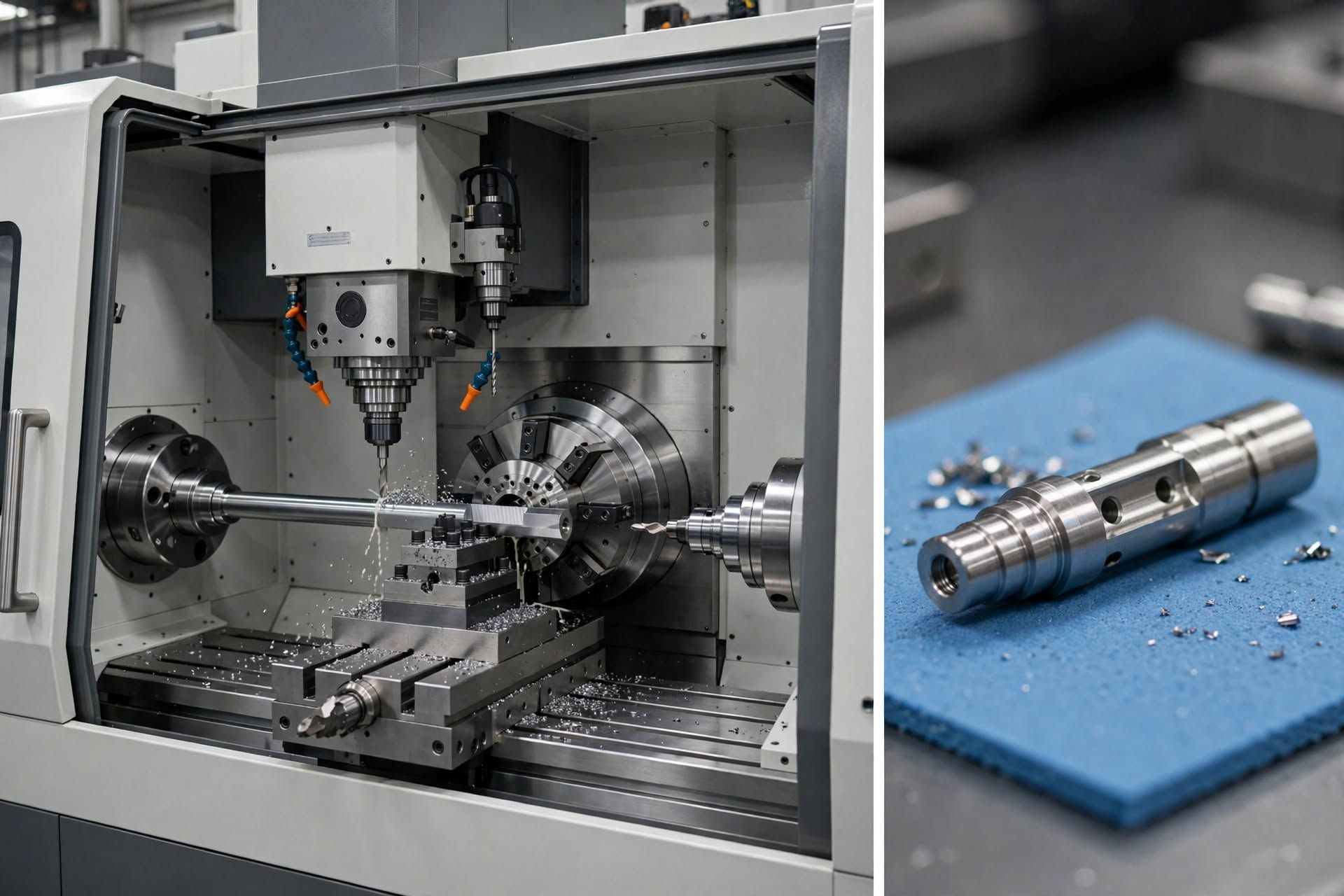
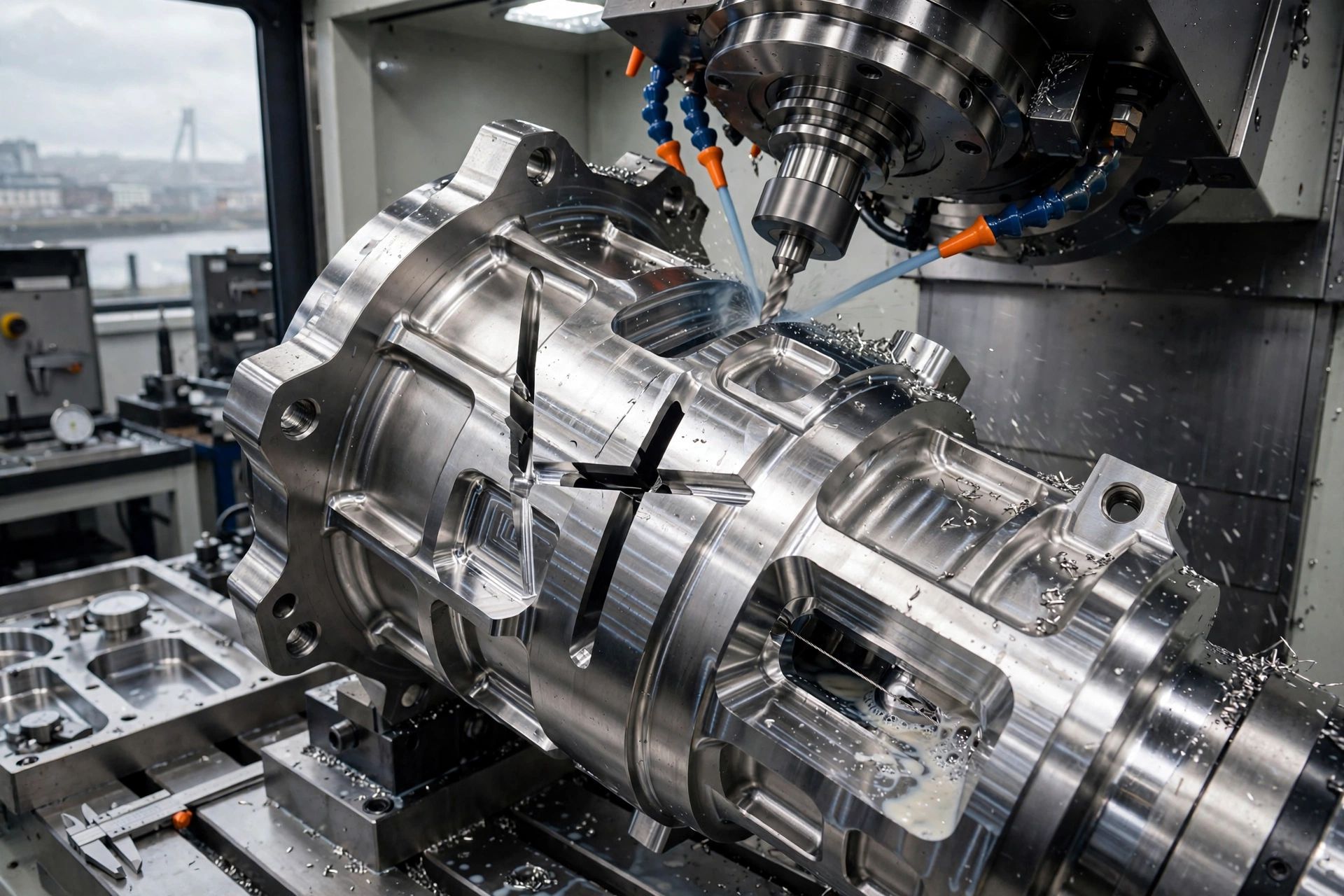
The revised process used a multi-axis CNC sliding head lathe, allowing turning, drilling, threading and cross-machining to be completed progressively as the component moved through the machine.
A guide-bush-supported bar setup was selected to minimise unsupported material length. This was particularly important for the 12 mm diameter component, where excessive tool pressure could result in deflection and dimensional instability.
Rough turning operations were programmed with controlled cutting depths to maintain a stable cutting load in the 316 stainless material. Finishing passes were then applied using dedicated carbide tooling to achieve the specified dimensional tolerances and approximately Ra 1.6 µm surface finish on the primary turned surfaces.
The external thread was produced using a controlled threading cycle rather than relying on a separate secondary operation. Cross-drilled features were machined using live tooling, eliminating the need to remove the component and reposition it on another machine.
Toolpath sequencing was particularly important. Cutting operations were arranged to minimise non-cutting movements while allowing adequate chip evacuation around the smaller internal features. This reduced unnecessary machine time while maintaining predictable tool wear.
The team also monitored tool life across the production run. Instead of waiting for measurable deterioration to affect component quality, tooling was scheduled for replacement at predetermined production intervals based on observed wear patterns.
This approach provided a repeatable manufacturing route suitable for high-volume precision turned parts, while reducing the handling associated with conventional multi-stage production.
Outcome & Operational Impact
The redesigned process reduced average cycle time from approximately 4.8 minutes to 3.1 minutes per component, representing a reduction of around 35%.
Secondary handling operations were effectively eliminated, while setup time across the production batch fell by approximately 45%.
The integrated sliding-head process also improved production flow by completing the majority of features in a single machining cycle. Finished components achieved the required dimensional tolerances and approximately Ra 1.6 µm on the specified surfaces.
For the client, the resulting process delivered a more competitive production cost and improved manufacturing capacity without adding additional machines or external subcontractors.
The project demonstrates the value of combining CNC sliding head turning with intelligent toolpath planning when producing small, intricate components at volume. For automotive suppliers and other manufacturers requiring repeatable CNC machining Scotland, process optimisation can be just as important as raw machining capability.
Have a complex engineering component or production bottleneck? Send your technical specifications and RFQ straight to the engineering team at Strategic Innovations Dundee Ltd for a comprehensive manufacturing evaluation.