Reducing Setups for a Complex Duplex Subsea Manifold Fixture Using 5-Axis CNC Machining
The Challenge
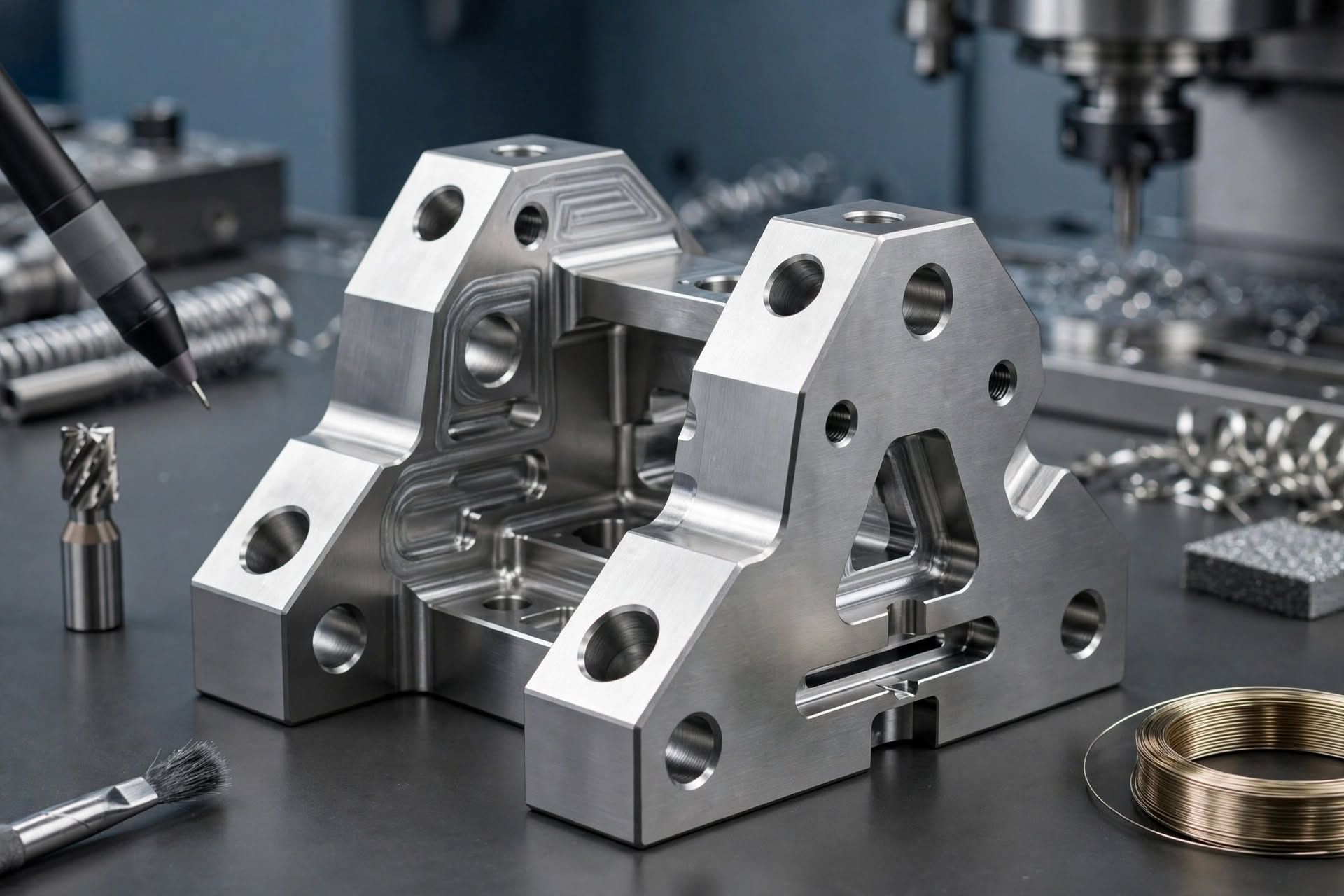
A UK subsea equipment manufacturer required a compact stainless-steel manifold fixture for a specialist assembly rig. The component incorporated multiple intersecting bores, angled mounting faces, recessed pockets and a series of small locating features that needed to remain accurately related across several planes.
The selected material was Duplex stainless steel, chosen for its strength and corrosion resistance but presenting a significantly more demanding machining requirement than conventional aluminium or mild steel.
The original manufacturing route involved multiple setups, increasing datum-transfer risk and extending machine time. Thin sections around several pockets also created a risk of vibration and tool deflection during finishing operations.
For this CNC machining Scotland project, the objective was to produce a stable, repeatable manufacturing route while reducing handling, maintaining tight feature relationships and achieving a controlled surface finish.
The Engineered Solution
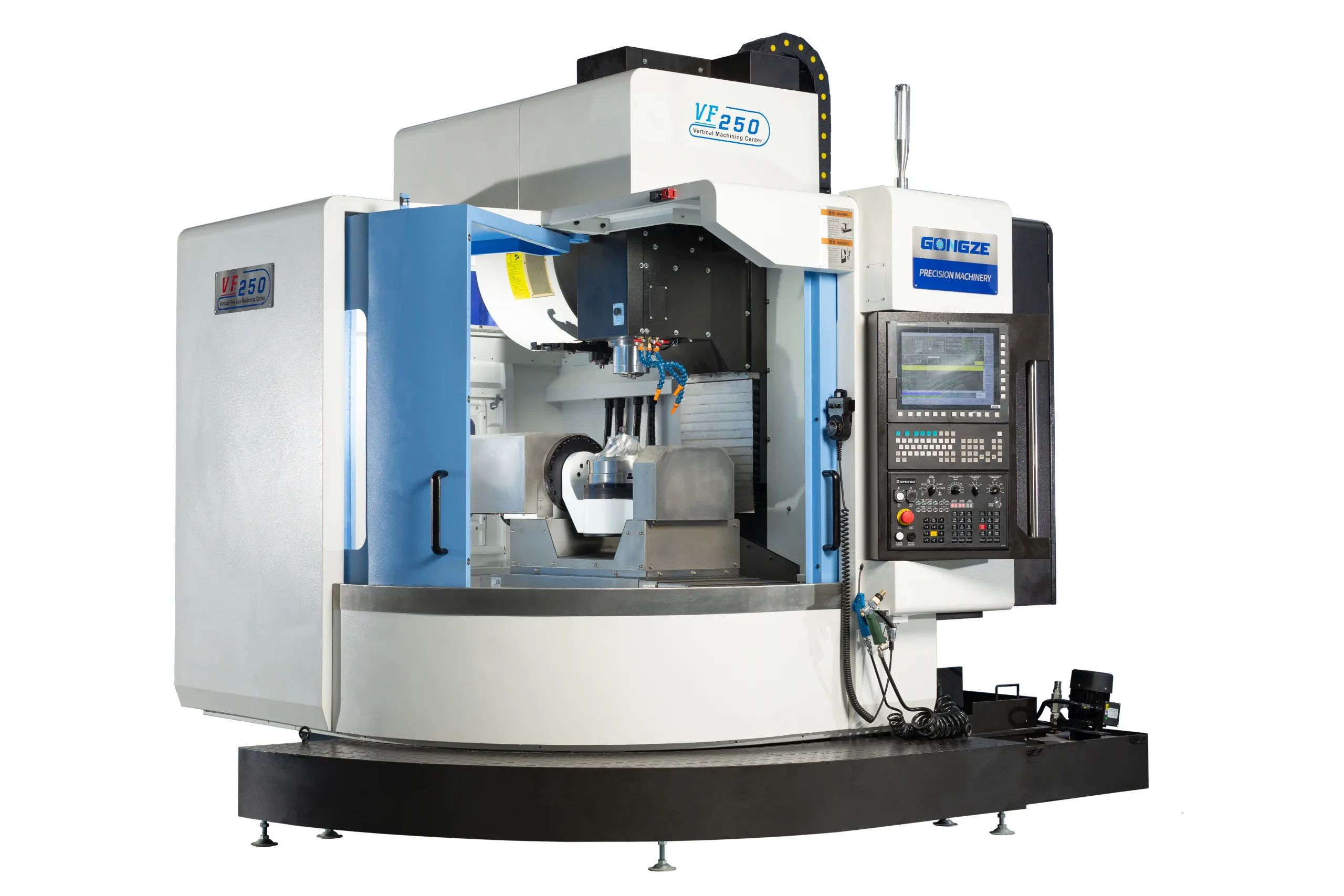
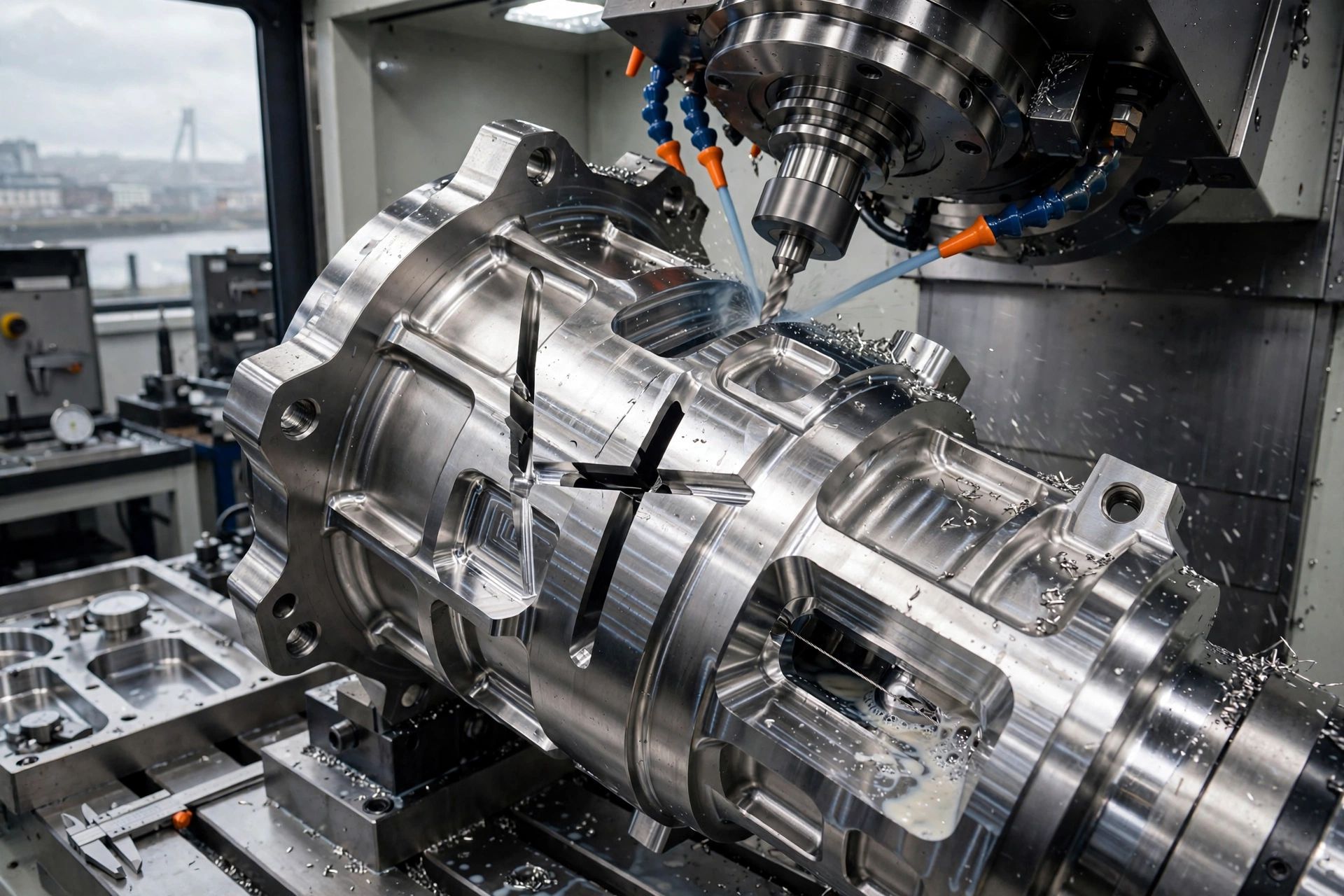
The engineering team at Strategic Innovations Dundee Ltd began by reviewing the component geometry and identifying which features could be consolidated into a single machining strategy. Rather than treating each face as an independent operation, the team developed a 5-axis approach allowing the workpiece to remain referenced from a common datum for the majority of the machining cycle.
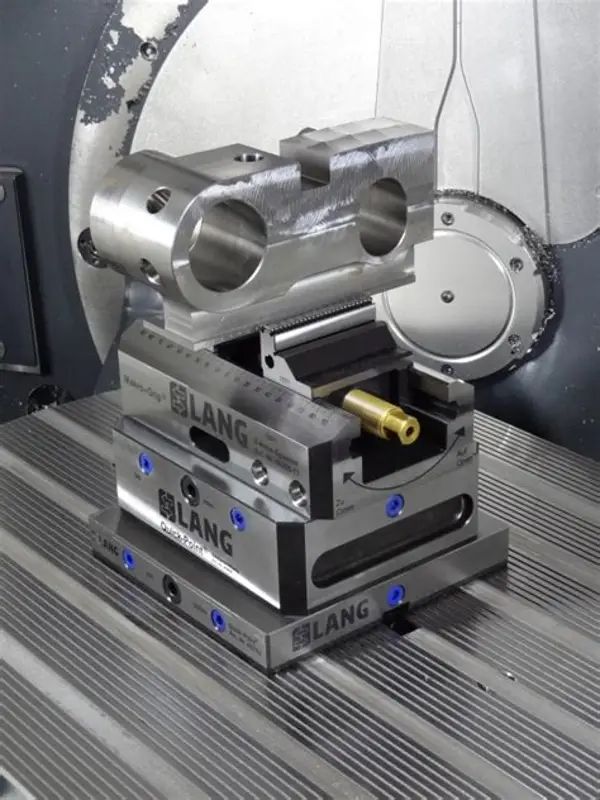
This 5-axis CNC milling strategy reduced the planned setup count from three to one primary machining setup. Simultaneous-axis positioning allowed angled faces and compound features to be approached without repeatedly reclamping the component.
Duplex stainless required careful control of cutting conditions. Conservative radial engagement was used to limit heat generation, while rigid workholding reduced movement around the thinner wall sections. Toolpaths were programmed to maintain consistent cutter engagement, with adaptive roughing used to remove bulk material before smaller-diameter tools were introduced for finishing.
Particular attention was given to tool deflection around the recessed pockets. Instead of attempting to remove material aggressively with a long-reach cutter, the machining sequence progressively reduced stock and reserved a controlled finishing allowance. Shorter, more rigid tooling was then used where access permitted.
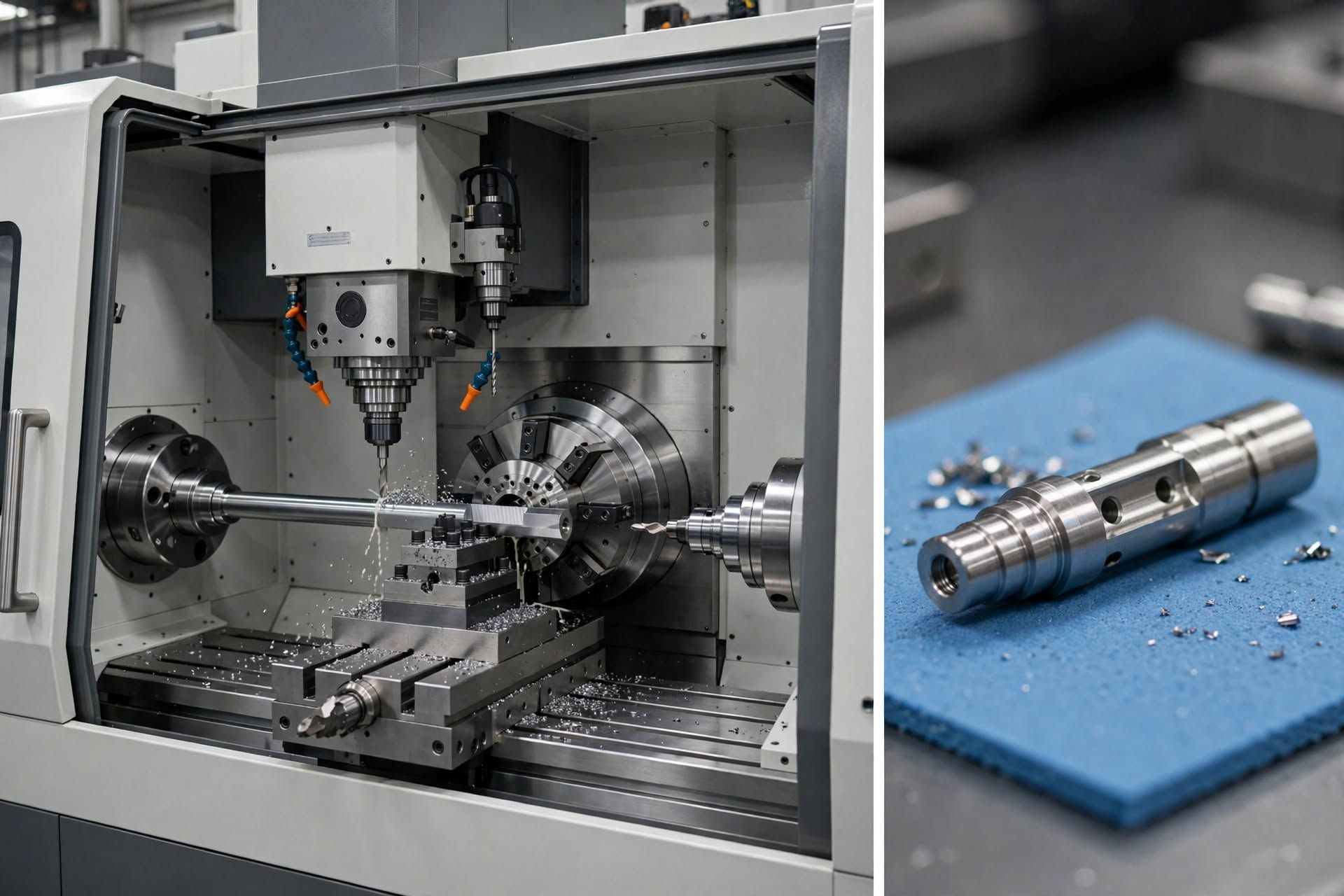
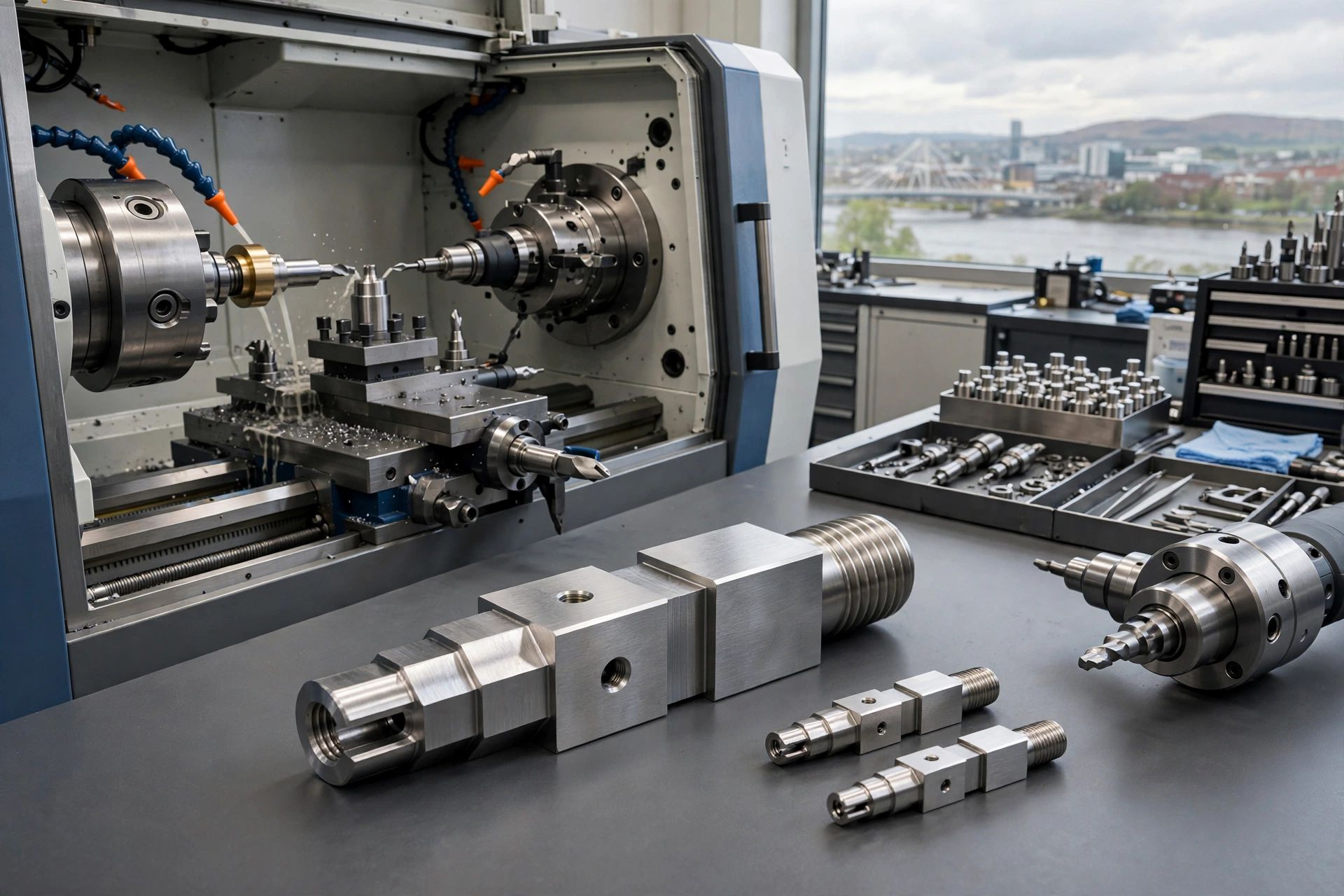
Several smaller cylindrical components required alongside manufacture, so precision turned parts were produced separately using conventional CNC turning. Where production quantities justified it, CNC sliding head turning provided an efficient route for small-diameter locating components and threaded features.
A hardened tooling insert within the fixture presented another challenge. Its blind keyway could not be produced economically using conventional milling. The team therefore incorporated EDM wire erosion Scotland capability into the manufacturing route, producing the keyway accurately without introducing excessive cutting forces into the hardened material.
Following machining, critical surfaces received controlled finishing and deburring. Laser marking was then used for component identification, before the individual parts were brought together through sub-assembly engineering to create a ready-to-use fixture package.
The Outcome & Operational Impact
The revised manufacturing strategy reduced primary setup time by approximately 55%, largely by eliminating two intermediate reclamping operations. Consolidating the main geometry into one 5-axis setup also simplified the datum structure and reduced manual intervention.
The revised process shortened estimated production lead time from approximately eight working days to five, while the controlled finishing strategy achieved surface roughness of approximately Ra 1.6 µm on the specified machined faces.
The combination of milling, turning, EDM and assembly through a single subcontract manufacturing route also reduced external process coordination. Instead of managing separate suppliers for specialist operations, the customer received a completed fixture package from one engineering partner.
This representative project demonstrates how precision engineering Dundee capability can combine advanced machining methods with practical process planning to improve both technical performance and production efficiency.
Have a complex engineering component or production bottleneck? Send your technical specifications and RFQ straight to the engineering team at Strategic Innovations Dundee Ltd for a comprehensive manufacturing evaluation.