The Challenge
A UK developer of high performance automotive powertrain systems required a specialist thermal management assembly for an advanced vehicle test platform. The assembly consisted of a complex aluminium coolant manifold, multiple precision turned stainless steel fittings, hardened steel location inserts, and a compact mounting arrangement.
The original manufacturing route involved three separate suppliers. The manifold required several milling setups to machine angled ports, internal flow passages, and narrow sealing faces. The stainless steel fittings were produced separately and then transferred to another supplier for finishing. Final assembly was completed by the client.
This fragmented process created long lead times and increased the risk of dimensional variation between mating components. The coolant manifold also contained thin wall sections that were susceptible to vibration during machining. Several internal features required accurate tool access while maintaining sealing surfaces with a surface finish of Ra 1.6 µm or better.
The client approached Strategic Innovations Dundee Ltd for a more efficient subcontract manufacturing solution that could reduce supplier handovers and simplify final assembly.
The Engineered Solution
The engineering team reviewed the complete assembly rather than treating each component as an isolated machining requirement. This allowed the manufacturing sequence to be planned around critical interfaces, machining access, and efficient component flow.
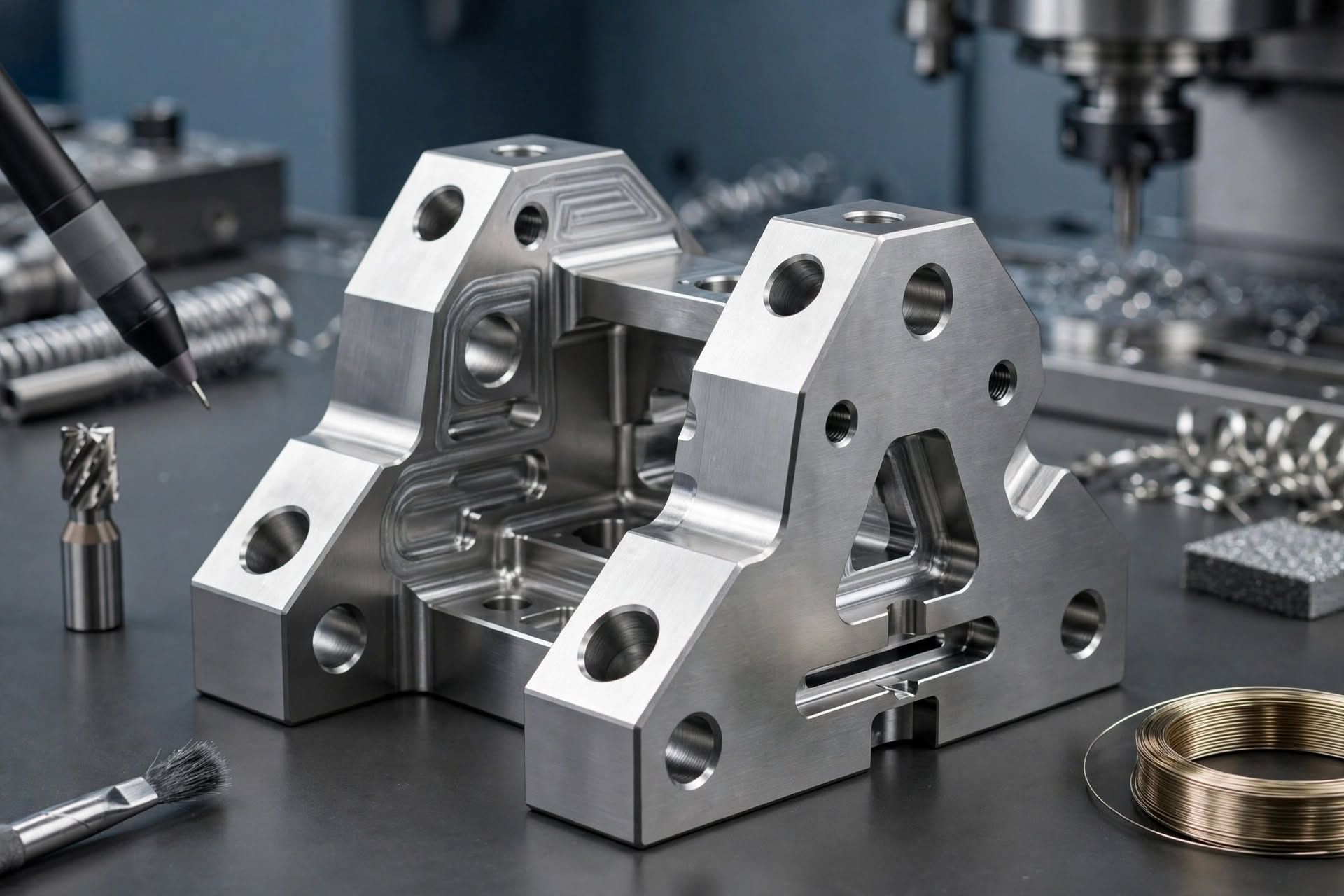
The main manifold was produced from a high strength aerospace grade aluminium billet. Although the component was intended for a non regulated automotive test system, its geometry demanded careful control of wall thickness and machining forces.
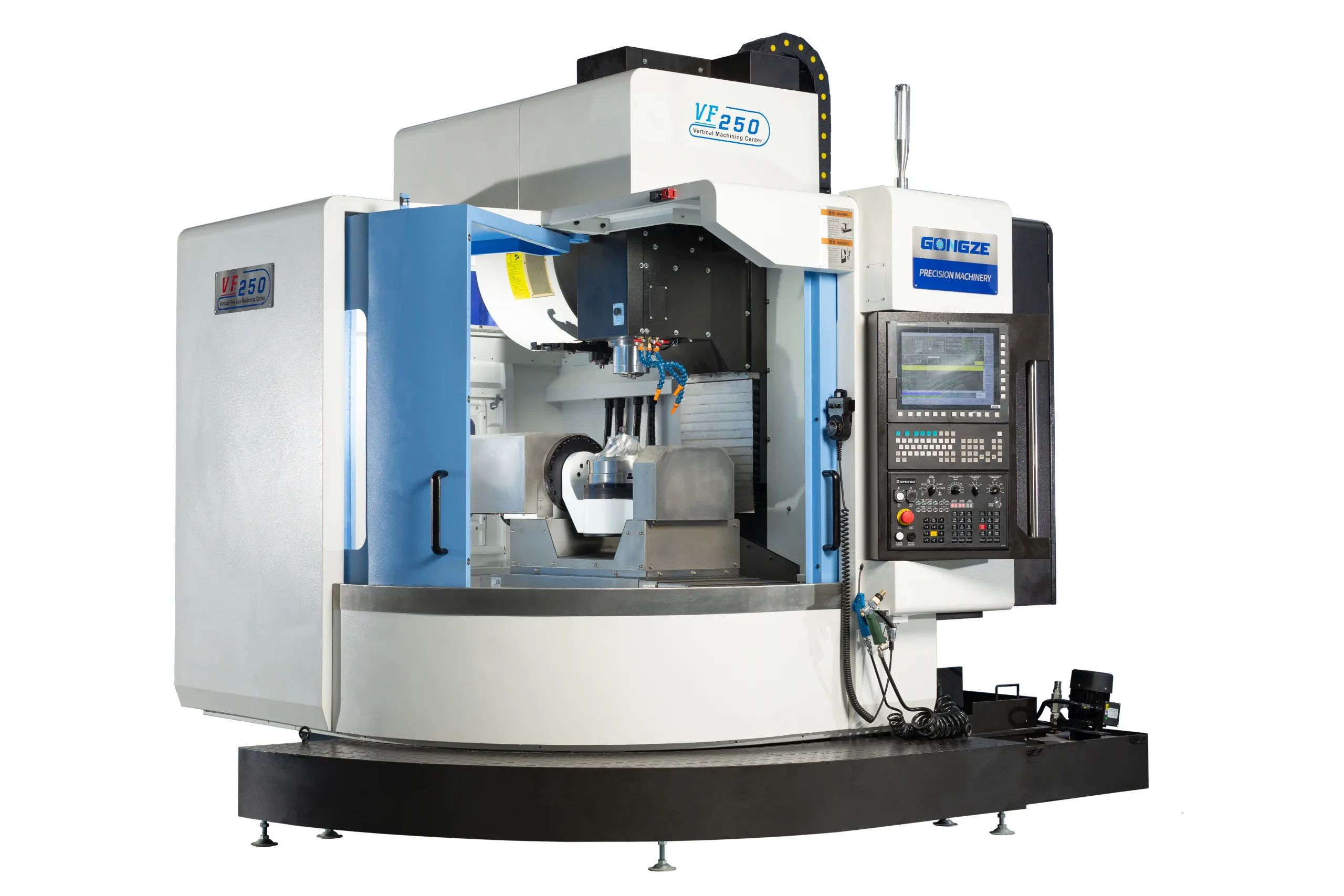
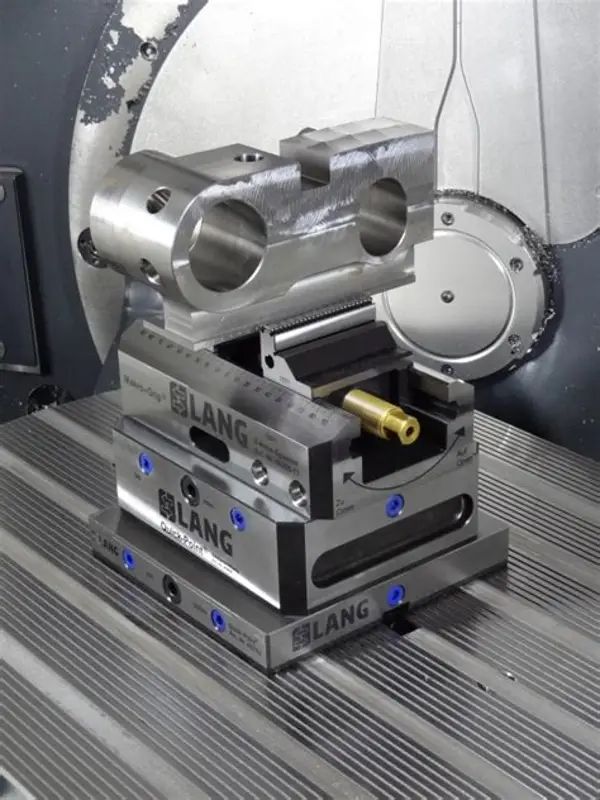
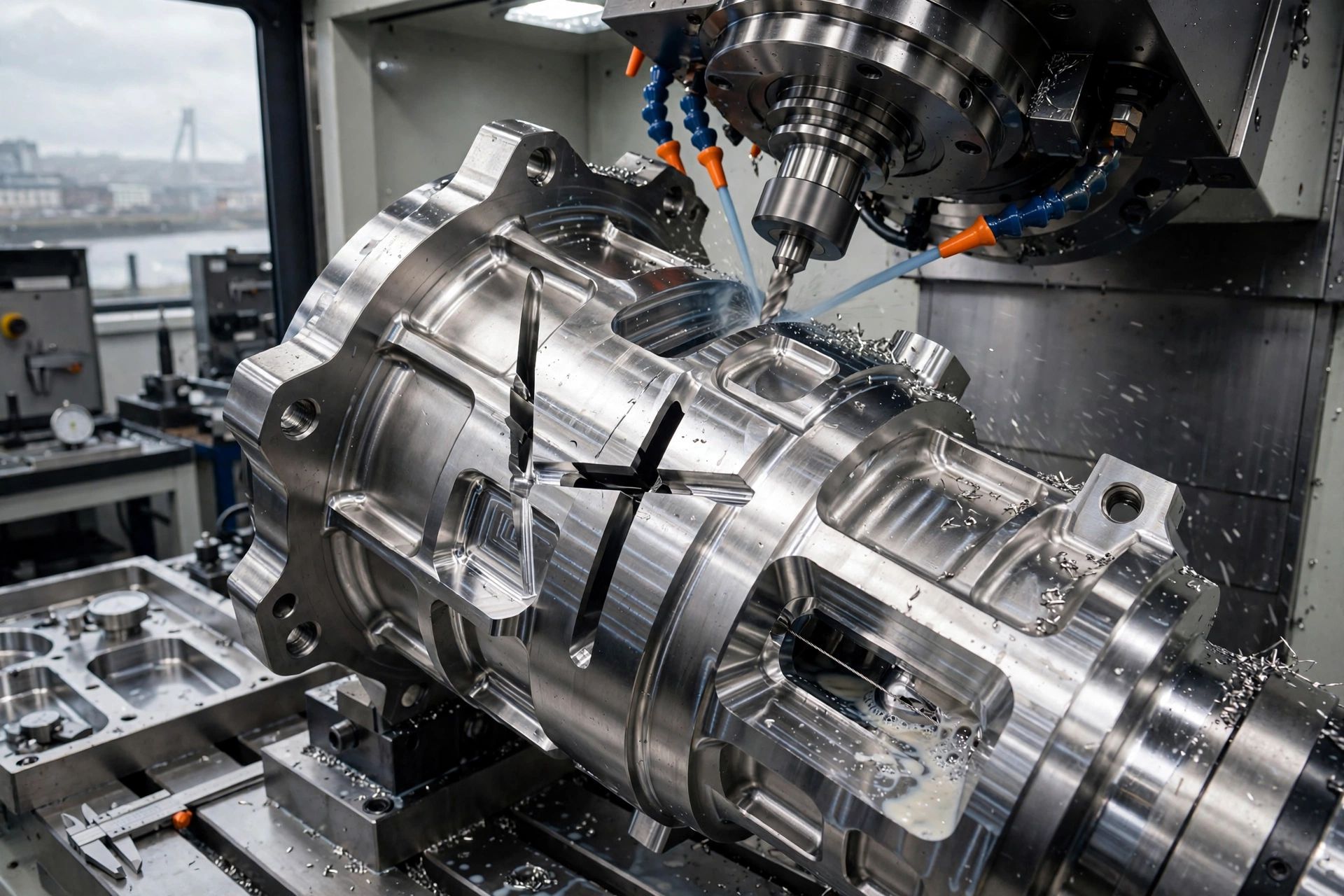
Using advanced 5 axis CNC milling, the team programmed a continuous machining strategy that provided access to multiple angled ports and complex external profiles in a single primary setup. The original route required three separate fixture positions. The revised process reduced the work to one primary setup followed by a controlled finishing operation.
Adaptive roughing toolpaths were used to maintain a consistent cutting load and reduce unnecessary stress on the thin wall sections. Material was removed in stages to prevent distortion while leaving sufficient stock for final finishing passes.
Long reach cutting tools were selected for the internal flow features. Tool engagement was controlled to reduce deflection and maintain consistent geometry at the deepest areas of the manifold. Finishing passes were then applied to the sealing faces and port locations to achieve the specified surface quality.
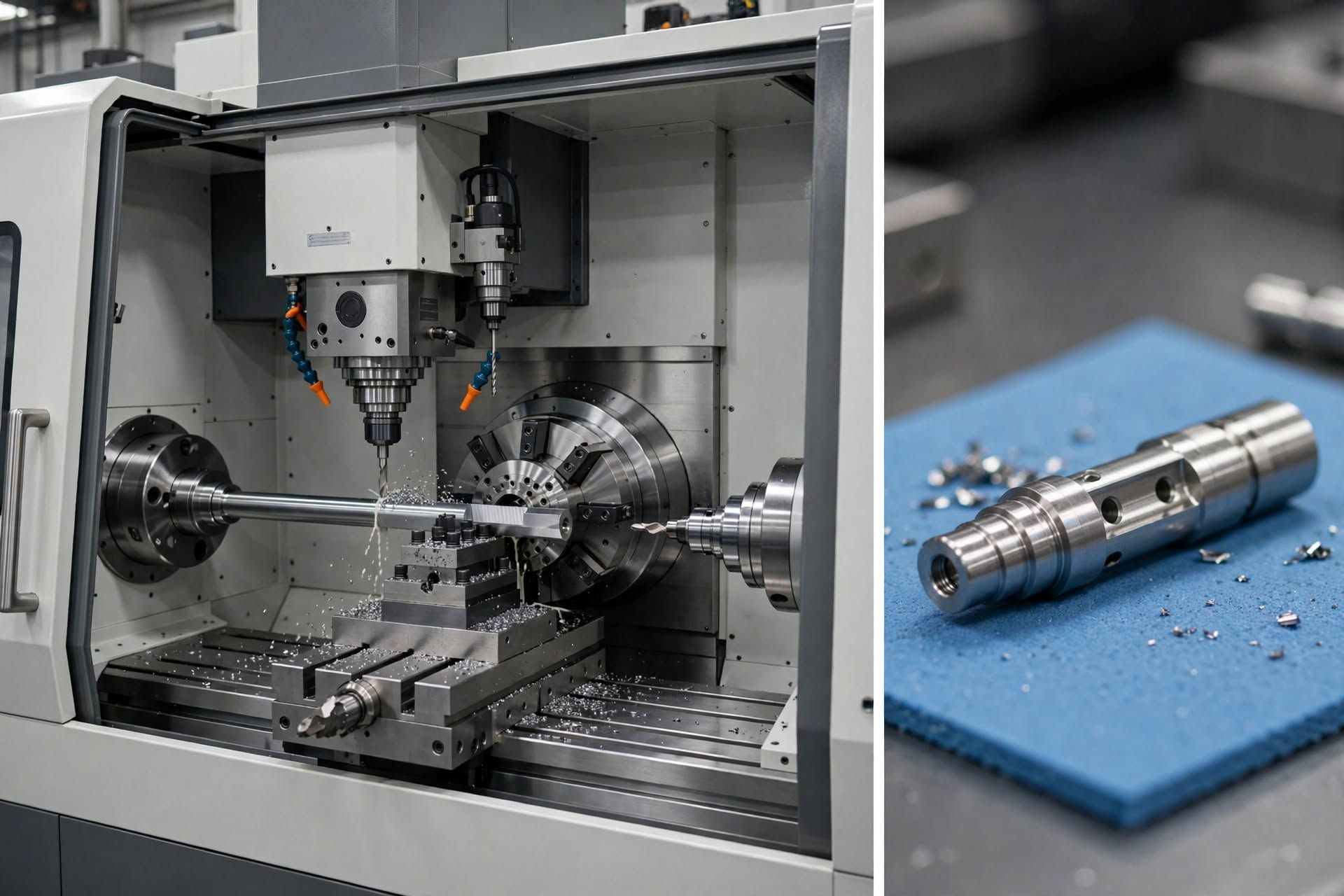
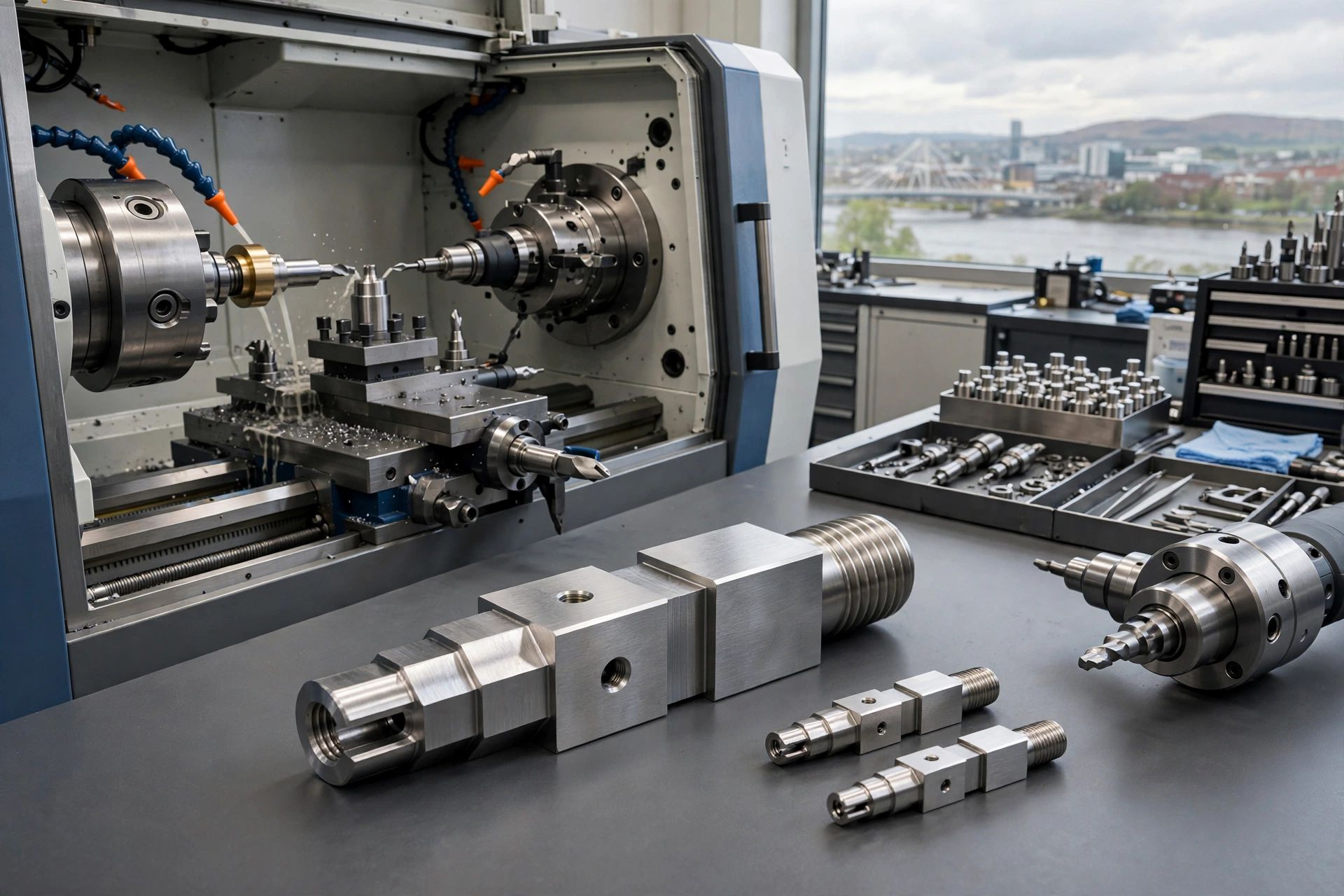
The stainless steel fittings were manufactured through CNC sliding head turning. The machine capability supported efficient production of the small diameter components while maintaining accurate threads, seating profiles, and concentric features. This approach reduced handling time and created a repeatable process for the required batch quantity.
The hardened steel location inserts included narrow profiles that were unsuitable for conventional milling. The team used EDM wire erosion Scotland capability to produce the required geometry without placing excessive cutting forces on the hardened material.
Following machining, the components received appropriate surface finishing and laser identification. The complete set was then brought together through in house sub assembly engineering. Each fitting and insert was installed according to the assembly drawing, allowing the client to receive a prepared system rather than managing multiple component deliveries.
This integrated approach demonstrated how precision engineering Dundee can combine milling, turning, specialist finishing, and assembly within one coordinated production route.
The Outcome and Operational Impact
The revised manufacturing strategy reduced setup time for the aluminium manifold by approximately 58 percent. Combining machining operations through 5 axis access also reduced component handling and removed several supplier transfer stages.
The complete project lead time was reduced from an estimated seven weeks to just under four weeks. The finished sealing surfaces achieved Ra values between 1.2 µm and 1.5 µm, meeting the required functional finish without additional manual correction.
The use of CNC sliding head turning improved production efficiency for the precision turned parts and reduced individual fitting cycle times by approximately 24 percent compared with the previous process.
By consolidating milling, turning, EDM work, finishing, and assembly, the client reduced administrative coordination and received a complete ready to install system. The project highlighted the value of integrated CNC machining Scotland services for complex automotive development work and demonstrated how subcontract manufacturing UK partners can improve lead times through smarter process planning.
Have a complex engineering component or production bottleneck? Send your technical specifications and RFQ straight to the engineering team at Strategic Innovations Dundee Ltd for a comprehensive manufacturing evaluation.