The Challenge
An oil and gas equipment manufacturer approached us with a production bottleneck involving a specialized subsea flow control housing. The component required machining from a solid billet of Duplex stainless steel (UNS S31803)—a high-strength superalloy notorious for rapid tool wear, work hardening, and severe strain-rate sensitivity.
The technical drawings specified an intricate internal geometry with wall thicknesses dropping down to less than 1.5 mm, creating a high risk of structural vibration and tool deflection. Furthermore, the design featured an internal, blind keyway with sharp internal corners that traditional milling cutters could not resolve, alongside tight sealing faces demanding a surface roughness value under 0.4 Ra.
The client’s previous subcontractor used a segmented workflow across three separate suppliers for turning, milling, and wire erosion. This fragmented process resulted in excessive setup variations, concentricity errors exceeding 0.05 mm, a compounding 12-week lead time, and a costly scrap rate of 18%.
The Engineered Solution
Our production estimators and programming team redesigned the workflow into an integrated, single-source manufacturing protocol executed entirely within our facility.
Phase 1: Multi-Axis Turning Pre-Machining
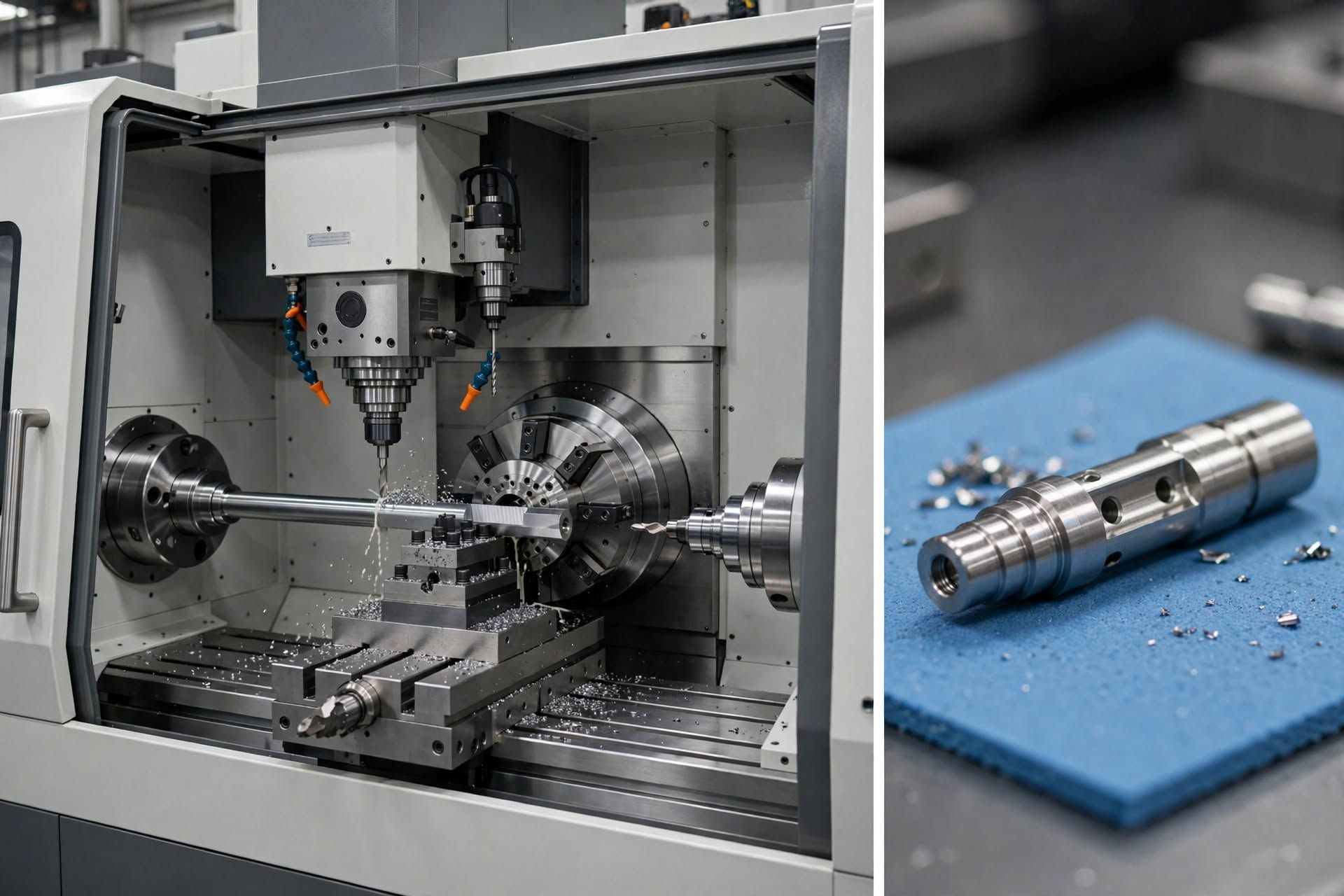
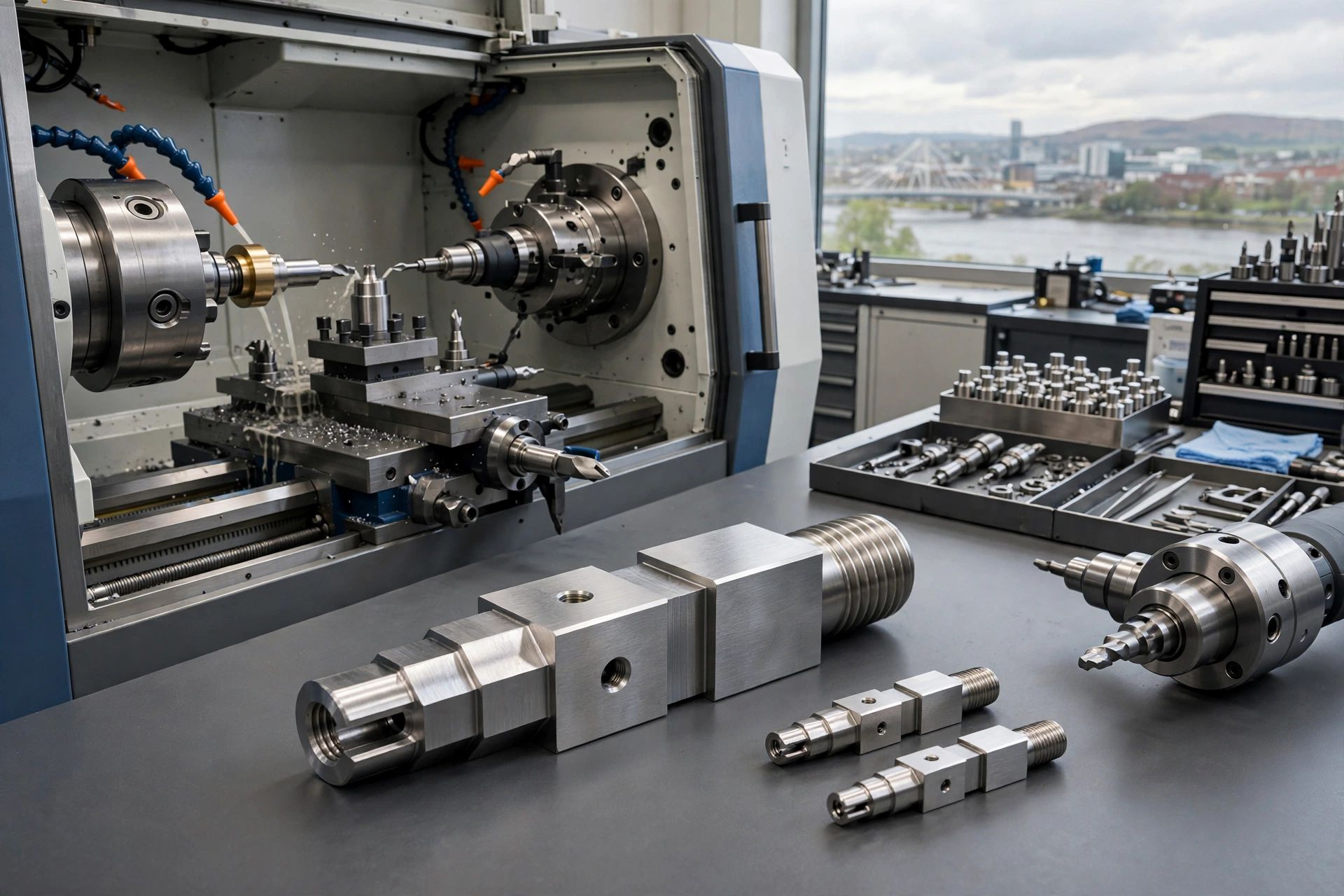
First, the solid Duplex raw material was processed using our high-volume CNC sliding head turning lathes to rough out the external diameters and deep internal bores. By utilizing high-pressure, through-spindle coolant at 70 bar, we broke down stringy chips efficiently and prevented the material from work-hardening before subsequent phases.
Phase 2: Consolidated 5-Axis Milling
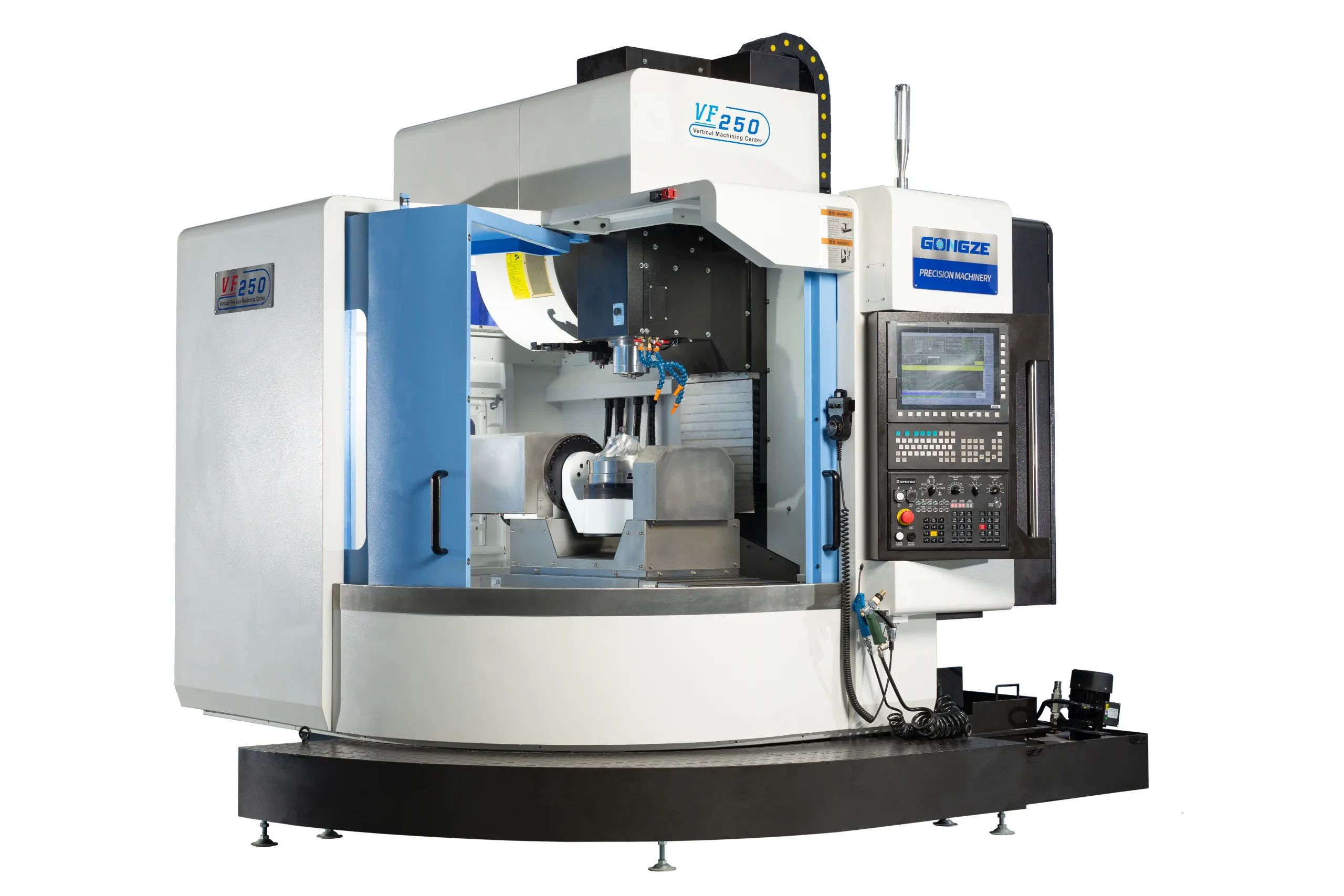
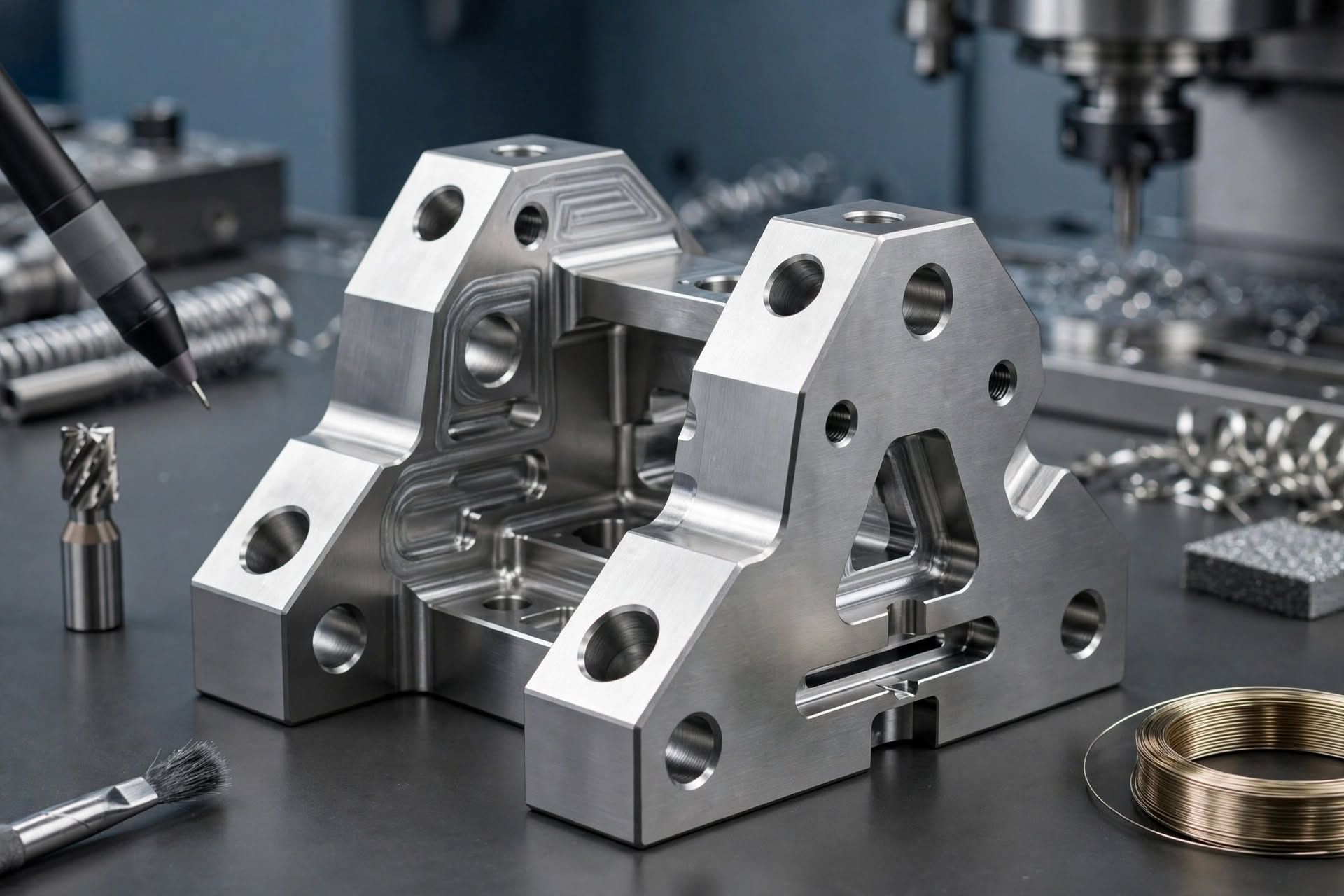
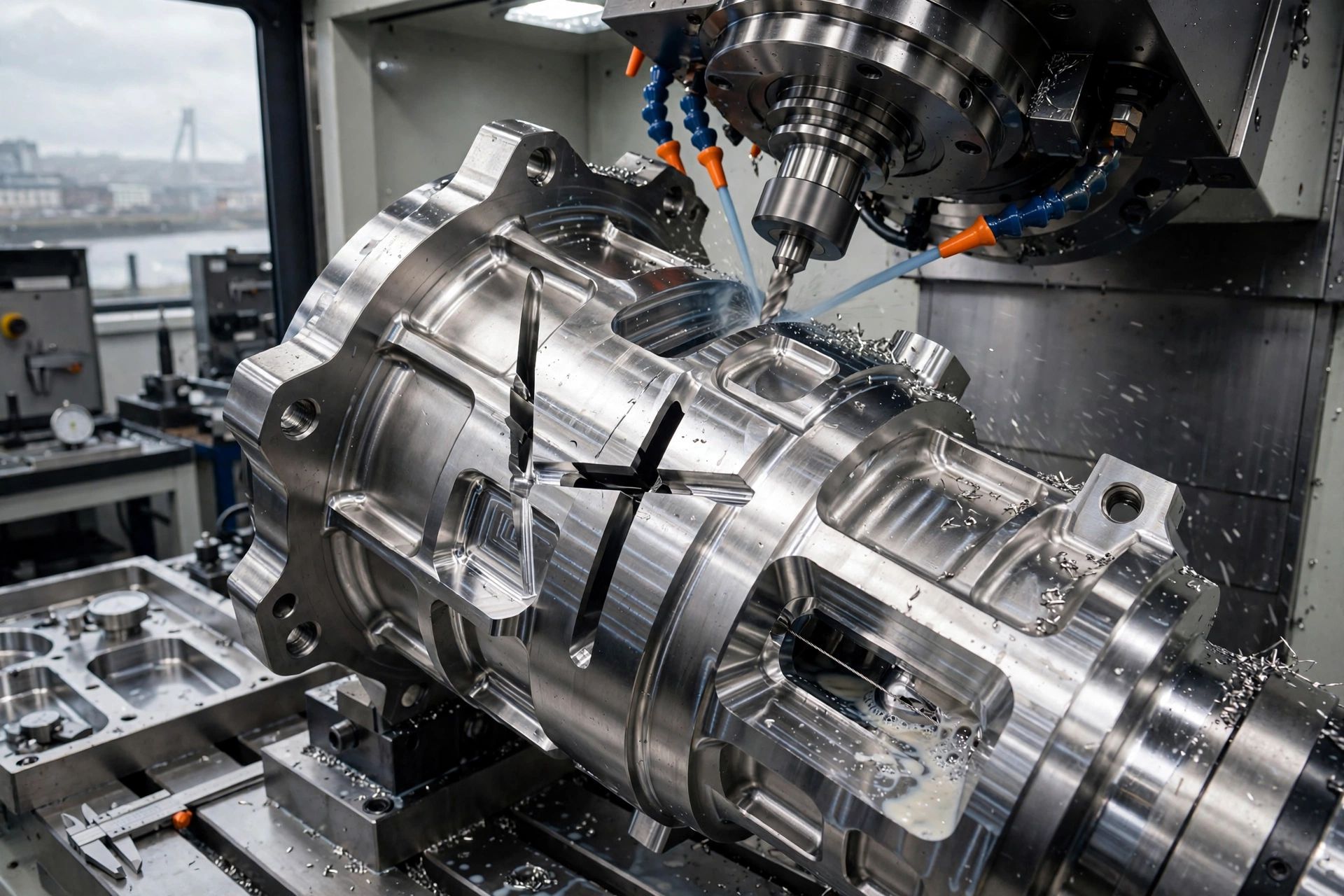
The pre-machined blanks were transferred directly to our simultaneous 5-axis CNC milling center. By leveraging full 5-axis articulation, our team machined the complex external flow ports, mounting holes, and intricate weight-reduction pockets in a single operational setup.
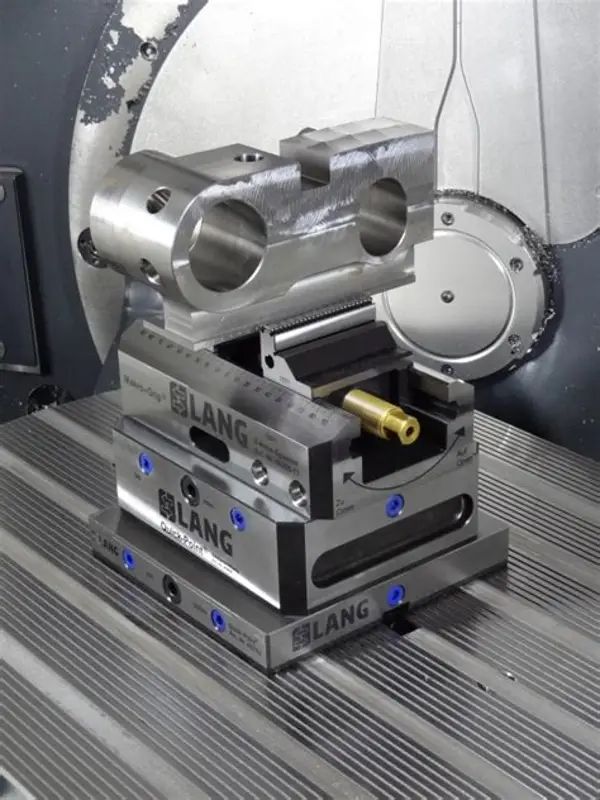
To overcome the thin-walled vibration risks, we programmed adaptive trochoidal toolpaths utilizing solid carbide, variable-helix endmills. This approach maintained a constant radial engagement and redirected cutting forces downward into the rigid work-holding fixture rather than pushing against the delicate walls, completely eliminating part deformation.
Phase 3: Precision EDM & Assembly
To resolve the blind internal keyway, we routed the parts to our specialized EDM wire erosion Scotland workshop. We utilized spark erosion to cut the sharp internal corners with sub-micron positional accuracy without introducing mechanical stress to the hardened Duplex structure.
Finally, the components underwent automated laser marking for component tracking and went into final sub-assembly engineering, where our technician team fitted custom elastomeric seals and corrosion-resistant fasteners. This allowed the client to receive a fully completed, tested manifold module under one single invoice.
The Outcome & Operational Impact
By routing this complex project through a single, vertically integrated facility, we achieved substantial, measurable improvements across all production key performance indicators (KPIs):
This successful run highlights our technical authority as a premier choice for demanding commercial sectors seeking high-precision, low-friction subcontract manufacturing UK solutions.
Technical Specifications & RFQ Evaluation
Strategic Innovations Dundee Ltd provides comprehensive precision engineering Dundee services designed to tackle the market’s toughest geometrical challenges, toughest material grades, and tightest delivery schedules.
Have a complex engineering component or production bottleneck? Send your technical specifications and RFQ straight to the engineering team at Strategic Innovations Dundee Ltd for a comprehensive manufacturing evaluation.