Optimising 5-Axis CNC Milling for a Complex Subsea Housing Fixture in Duplex Stainless Steel
Project Type: Subsea tooling and fixture
Material: Duplex 2205 stainless steel
Location: Dundee, Scotland
Capabilities: 5-axis CNC milling, EDM wire erosion, surface finishing and sub-assembly engineering
The Challenge
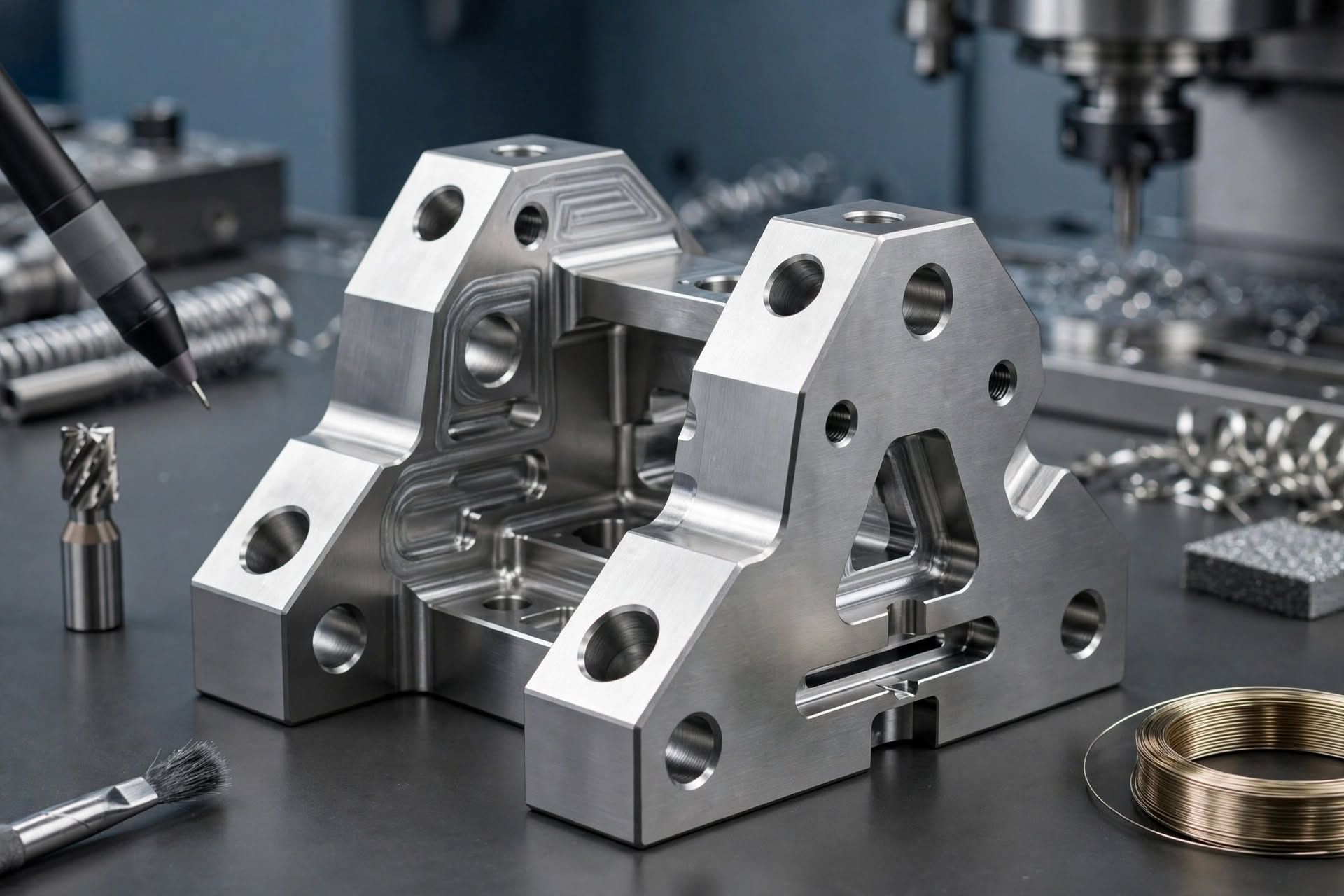
A subsea equipment manufacturer required a compact housing fixture manufactured from Duplex 2205 stainless steel. The component incorporated multiple angled faces, intersecting bores, recessed pockets and a narrow internal keyway. Several features had relatively thin supporting walls, creating a risk of vibration and tool deflection during machining.
The original manufacturing approach involved multiple setups across conventional milling operations, followed by a separate process for the hardened keyway. This created additional datum-transfer risk, extended setup time and increased overall lead time.
The requirement was therefore to produce a repeatable component with controlled geometry and a consistent machined finish while avoiding unnecessary handling between operations.
For CNC machining Scotland manufacturers, this type of multi-feature component requires careful process planning rather than simply increasing cutting speed.
The Engineered Solution
Strategic Innovations approached the project as a single manufacturing sequence, beginning with material preparation and detailed CAM planning.
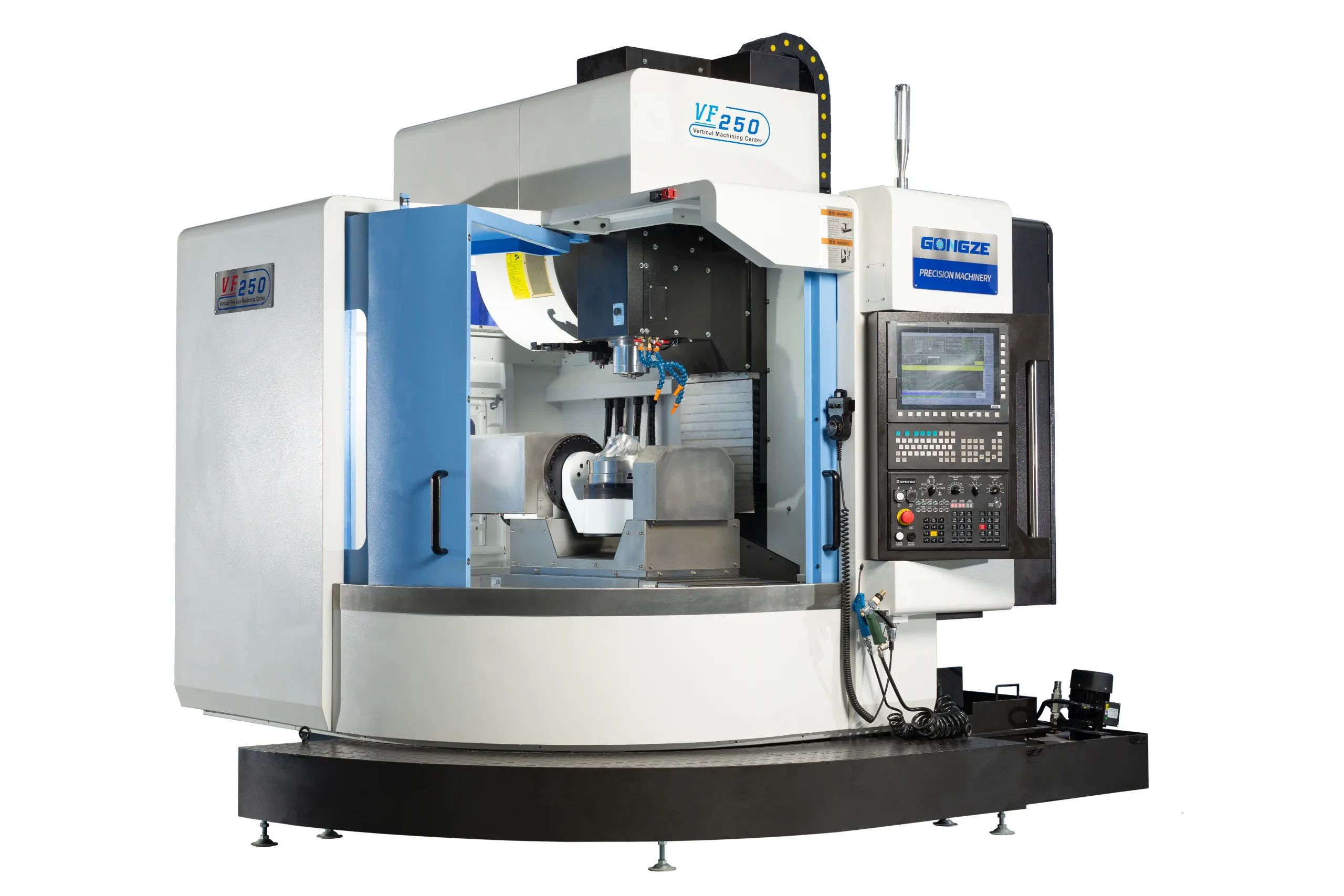
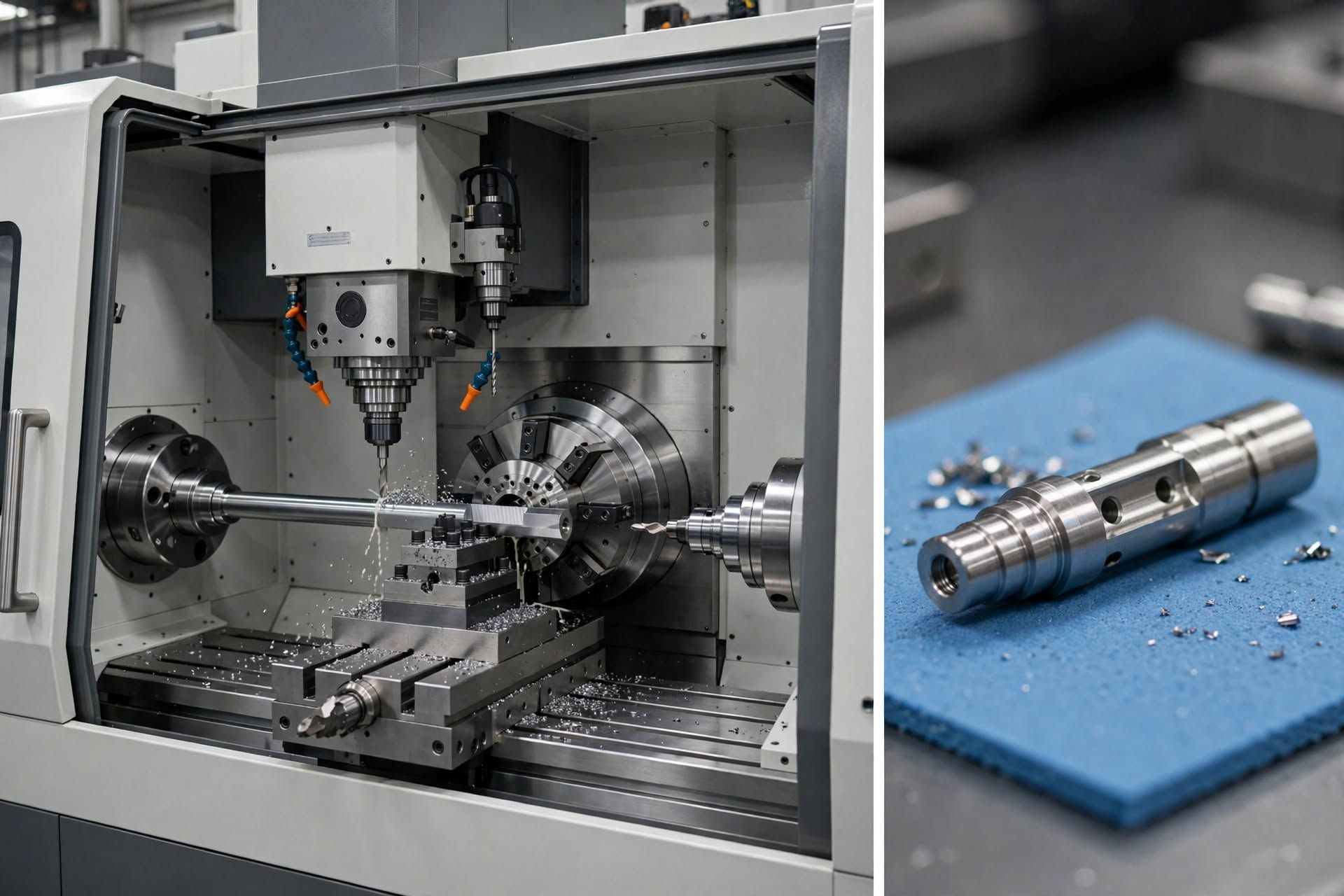
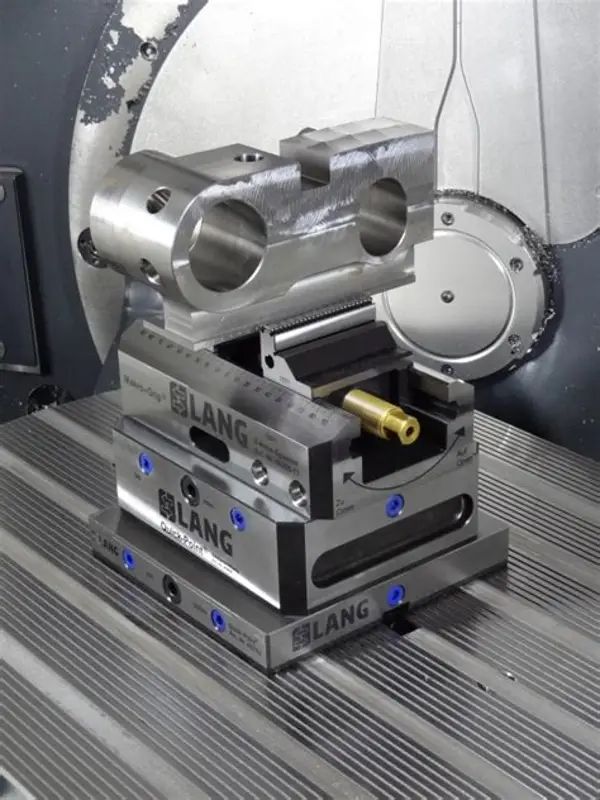
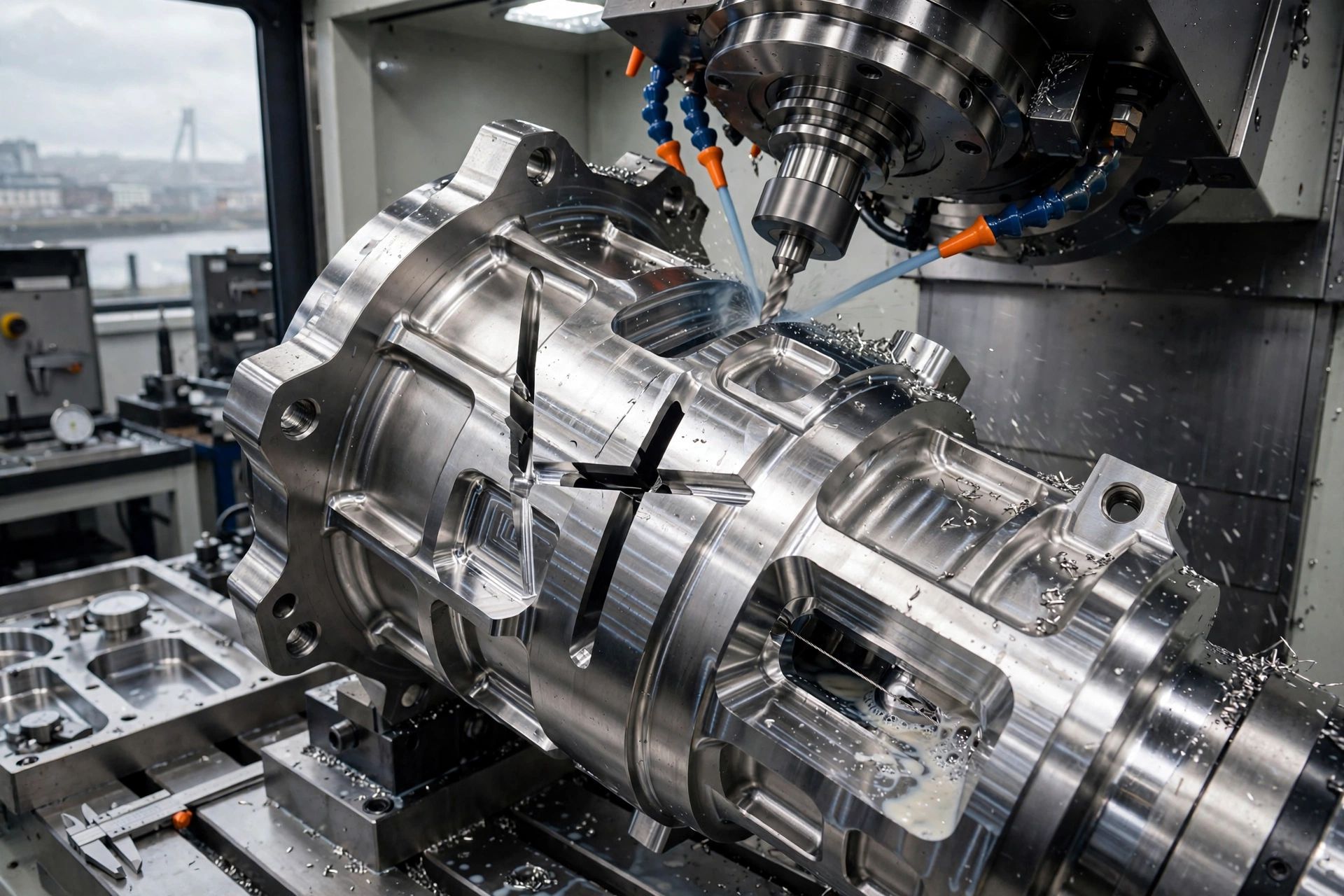
The Duplex 2205 billet was securely fixtured with sufficient support around the thin-wall regions. The machining strategy was developed around 5-axis CNC milling, allowing the spindle to approach several angled features without repeatedly repositioning the component.
The original three-setup concept was reduced to a primary five-axis operation. This reduced setup intervention by approximately 67% and helped maintain positional relationships between intersecting features.
Tool selection was particularly important because Duplex stainless steel can generate significant cutting forces and work-hardening if machining parameters are poorly controlled. Roughing operations used controlled step-downs and adaptive toolpaths to manage material removal while limiting excessive heat generation.
Finishing passes were then applied to the critical faces using smaller-diameter carbide tooling. Tool engagement was deliberately controlled around the thin-wall areas to minimise deflection and vibration. The CAM strategy also maintained consistent tool orientation around the angled surfaces, producing a more uniform finish.
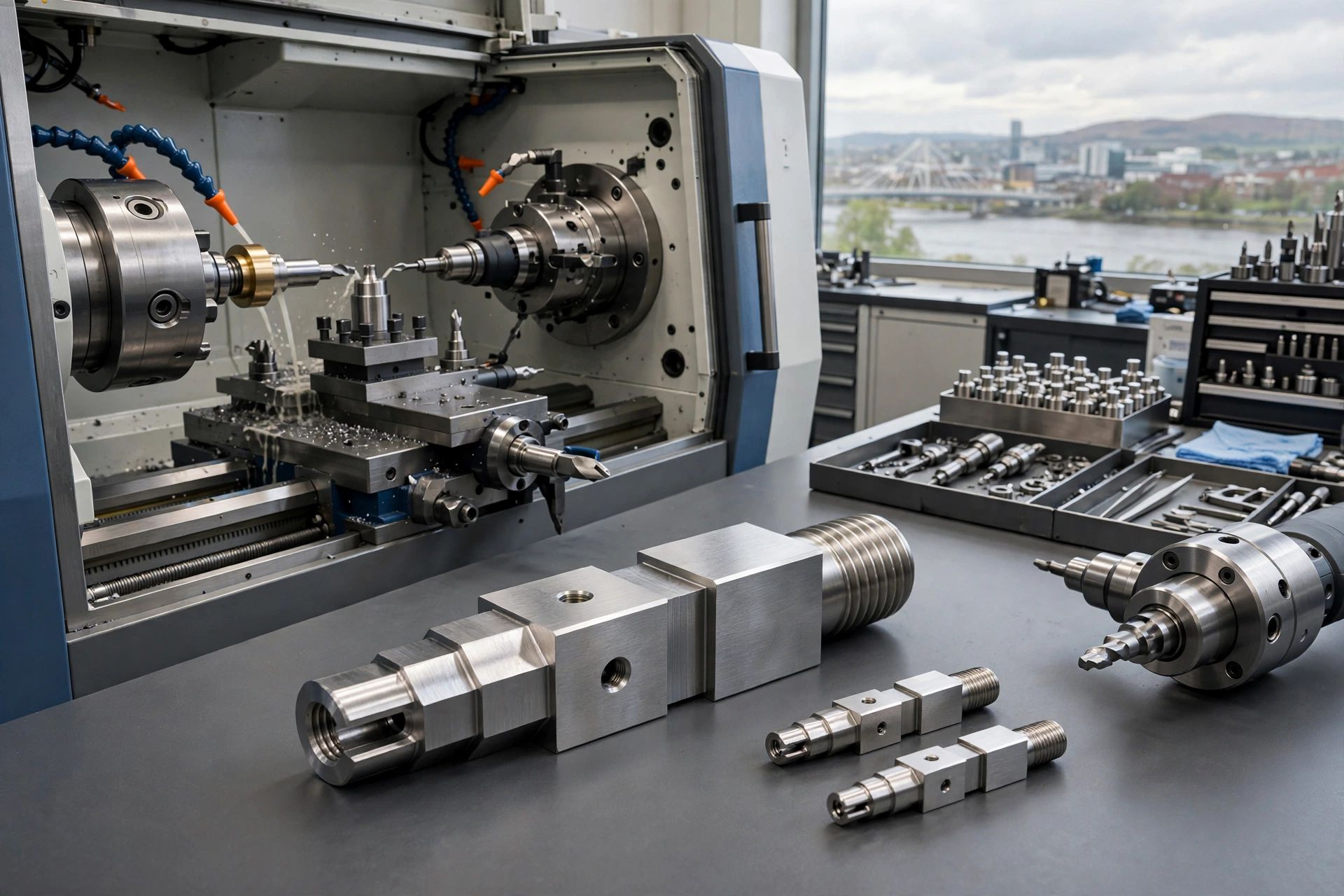
The internal keyway presented a different challenge. Rather than attempting to force the feature through conventional milling, the component was transferred to EDM wire erosion Scotland capability. Wire EDM provided a controlled method for producing the narrow geometry without introducing excessive mechanical cutting forces into the finished housing.
Critical external surfaces were subsequently deburred and finished, with particular attention paid to edges surrounding the machined pockets and access faces. Surface-finishing requirements were targeted at approximately Ra 1.6 µm on the principal machined faces, with tighter finishing applied where specified on the drawing.
The final stage incorporated inspection against the supplied engineering drawings before the component progressed to a simple fixture sub-assembly. This single-source approach reduced the need to coordinate separate machining and finishing suppliers.
The project demonstrated the advantage of combining precision engineering Dundee expertise with multiple in-house manufacturing processes rather than treating milling, EDM and finishing as isolated operations.
The Outcome & Operational Impact
The revised process reduced setup and handling time by approximately 67%, while the consolidated manufacturing route shortened the projected production lead time from 12 working days to 8 working days.
The controlled finishing strategy achieved approximately Ra 1.6 µm on the specified primary faces, while the EDM operation produced the narrow keyway without the vibration concerns associated with conventional cutting.
By combining 5-axis milling, EDM and finishing under one manufacturing route, the project also reduced external subcontract coordination and simplified production planning.
For organisations seeking subcontract manufacturing UK capacity, the project illustrates how process engineering can deliver improvements in lead time and manufacturing efficiency without compromising the technical requirements of a complex component.
Have a complex engineering component or production bottleneck? Send your technical specifications and RFQ straight to the engineering team at Strategic Innovations Dundee Ltd for a comprehensive manufacturing evaluation.