Reducing Machining Complexity in a Duplex Stainless Steel Subsea Fixture Through 5-Axis CNC Milling and EDM
The Challenge
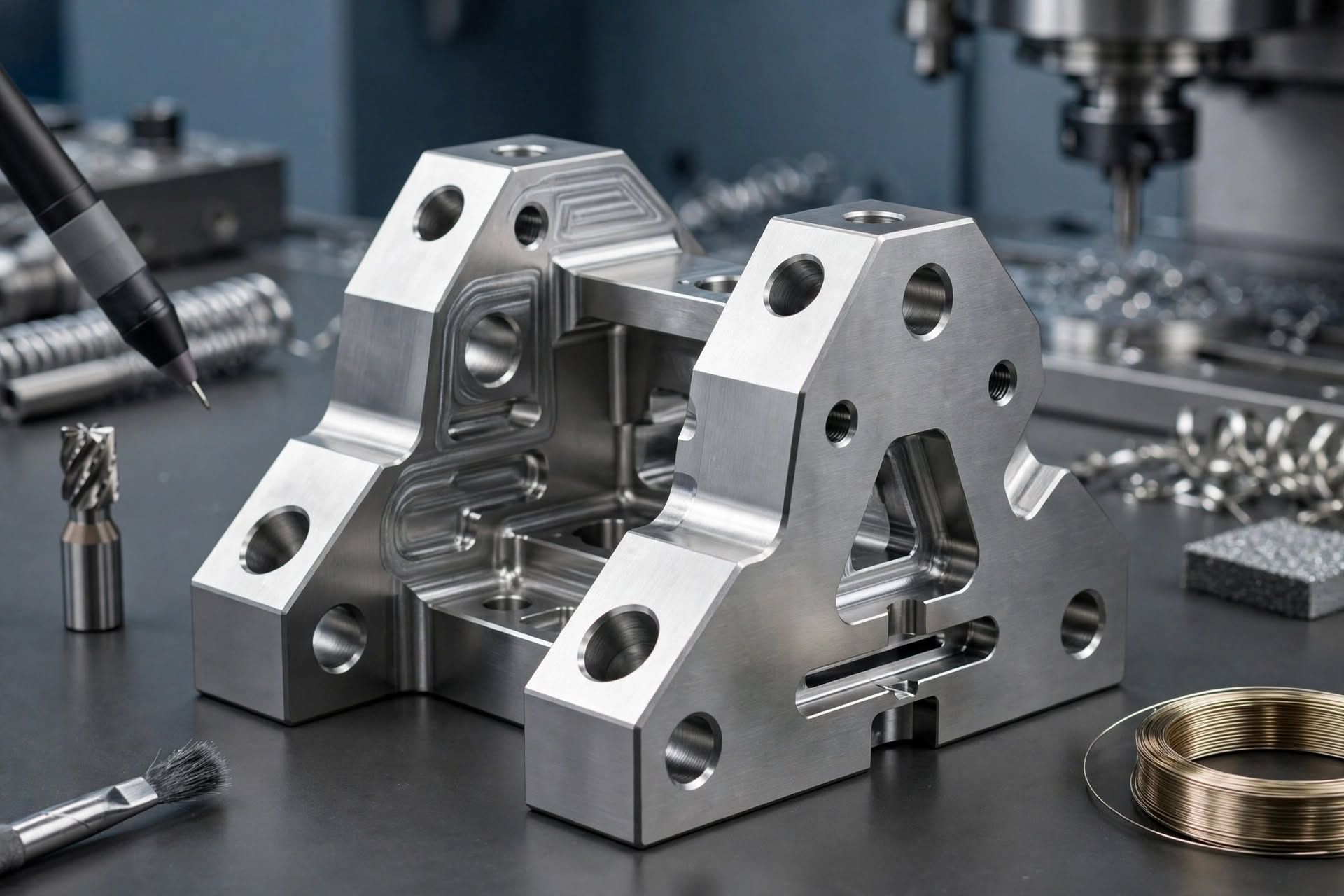
A UK subsea equipment manufacturer required a complex fixture manufactured from Duplex 2205 stainless steel for use during assembly and servicing of non-regulated subsea equipment. The component combined deep pockets, angled access features, precision mounting faces and several internal keyways, creating a challenging multi-process machining requirement.
The original manufacturing concept involved three separate milling setups followed by specialist EDM work. This increased handling, introduced opportunities for positional variation and extended the expected production lead time.
The thin sections around several pockets also created a risk of vibration and tool deflection. Maintaining consistent geometry while machining Duplex material required careful control of cutting parameters, tool engagement and workholding.
The client therefore needed a subcontract manufacturing UK partner capable of consolidating operations without compromising dimensional accuracy or surface quality.
The Engineered Solution
The project was approached as a complete manufacturing process rather than a series of isolated machining operations. This allowed the team to identify where 5-axis CNC milling could remove unnecessary repositioning and where EDM would provide a more efficient solution for difficult internal features.
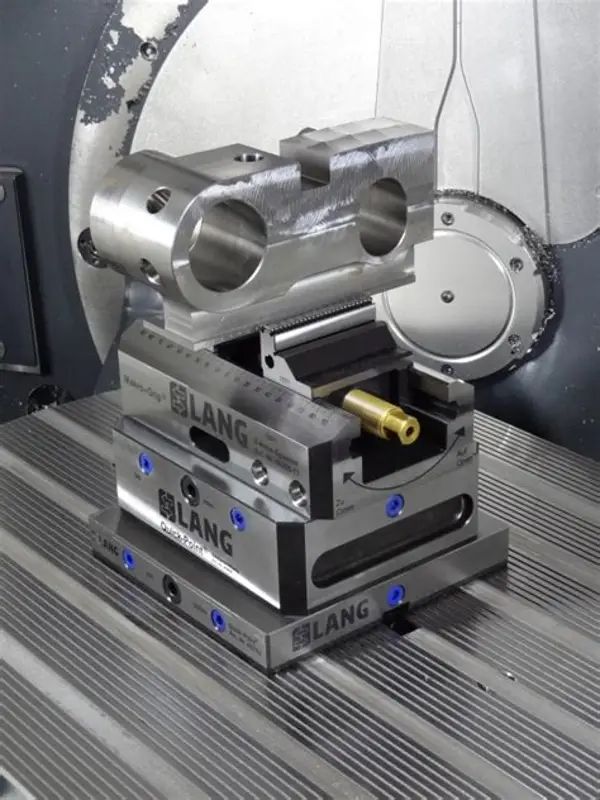
The initial stage involved reviewing the CAD model and identifying the datum structure, thin-wall regions and high-risk machining areas. A dedicated workholding strategy was developed to provide rigid support while leaving maximum access for simultaneous multi-axis machining.
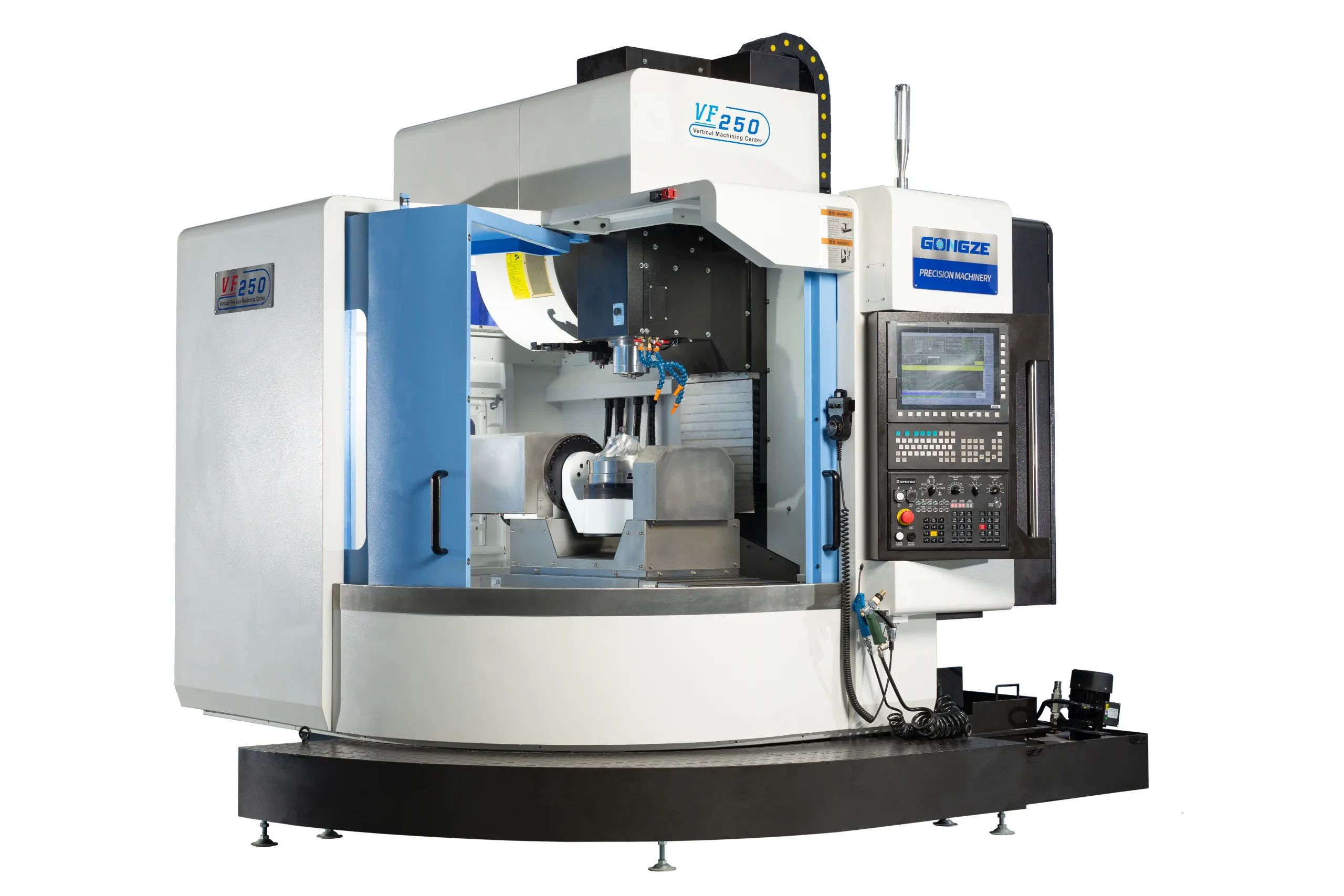
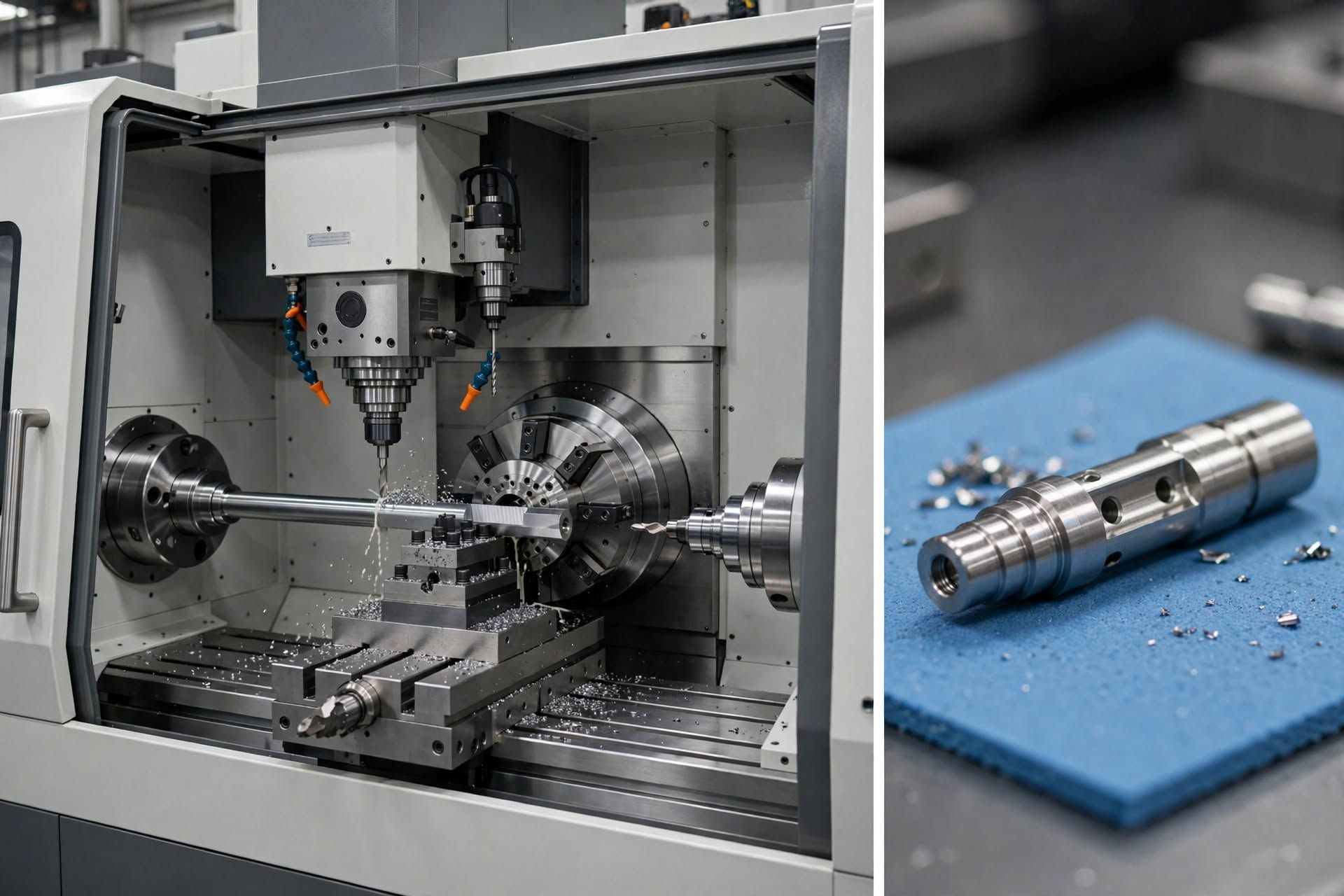
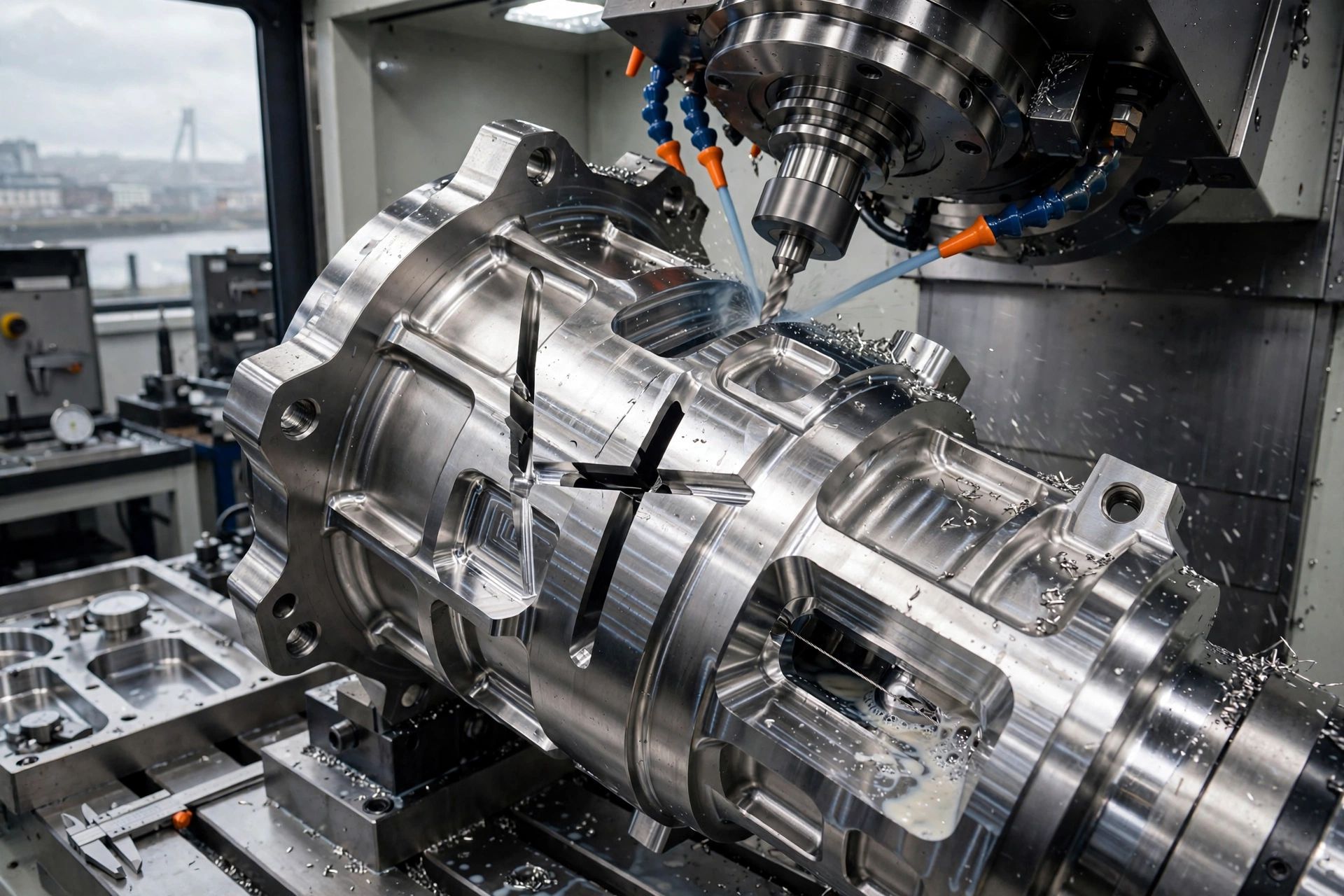
Using advanced 5-axis CNC milling, the main external geometry and angled features were produced in a substantially reduced number of setups. Instead of repeatedly repositioning the component, the machine could maintain a consistent datum relationship while approaching multiple faces through controlled tool-axis movement.
Duplex 2205 required particular attention to heat generation and tool wear. Conservative cutting parameters were applied during heavy roughing, followed by lighter finishing passes to minimise tool deflection. Adaptive roughing strategies were used to maintain a more consistent tool engagement, particularly within the deeper pockets.
The finishing operation focused on the functional mounting faces and internal profiles. Smaller-diameter carbide tooling was used where access was restricted, with finishing passes programmed to control cusp height and improve consistency across the component.
Several narrow internal keyways could not be efficiently produced through conventional milling. This is where EDM wire erosion Scotland capability became valuable. Rather than forcing a small cutting tool into a difficult geometry and accepting extended cycle times, the keyways were produced using controlled wire EDM. This provided clean profiles while avoiding excessive mechanical loading on the finished component.
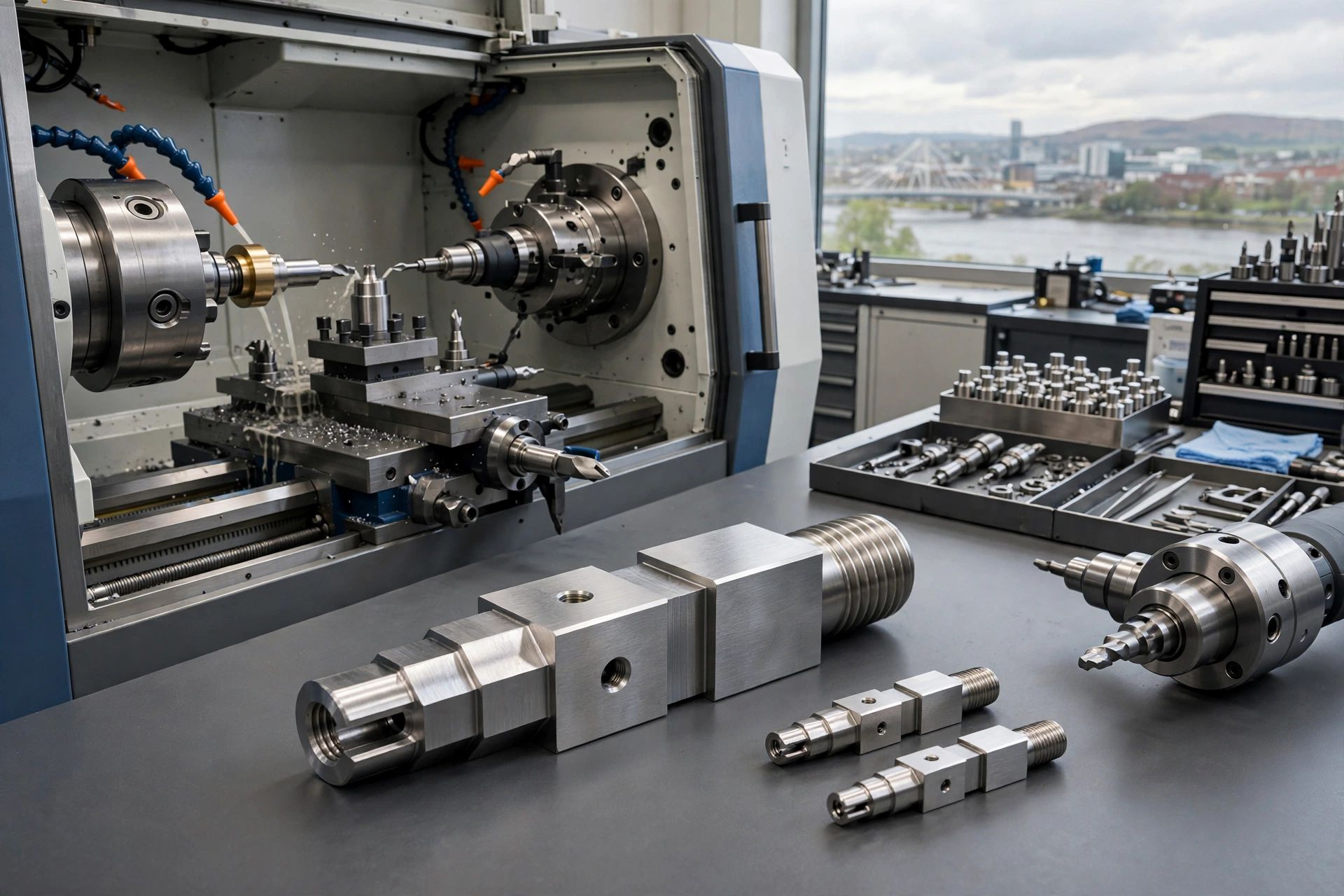
After machining, selected surfaces underwent finishing operations to remove sharp edges and prepare the fixture for assembly. Critical faces were checked against the drawing requirements, while the final component was visually inspected for burrs, tool marks and surface irregularities.
This integrated approach demonstrated the value of combining precision engineering Dundee capabilities under one manufacturing route rather than splitting milling, EDM and finishing between multiple subcontractors.
Outcome & Operational Impact
For this representative production scenario, the revised process reduced setup requirements from three primary milling setups to one principal 5-axis setup, producing an estimated 60–65% reduction in setup time.
The consolidated workflow also reduced inter-operation handling and removed the need for multiple external manufacturing stages. An illustrative production lead time of approximately 15 working days was reduced to around 10–11 working days.
Finished functional surfaces were targeted at approximately Ra 1.6 µm, with rougher non-functional areas controlled according to drawing requirements.
The combination of milling and EDM also reduced the risk associated with forcing conventional tooling into narrow keyway features. By bringing machining, EDM wire erosion, finishing and potential sub-assembly engineering together, the process provided a more streamlined route from raw material to finished fixture.
For manufacturers seeking responsive CNC machining Scotland, the key lesson is straightforward: complex components do not always require more processes—they often require a better engineered process.
Have a complex engineering component or production bottleneck? Send your technical specifications and RFQ straight to the engineering team at Strategic Innovations Dundee Ltd for a comprehensive manufacturing evaluation.